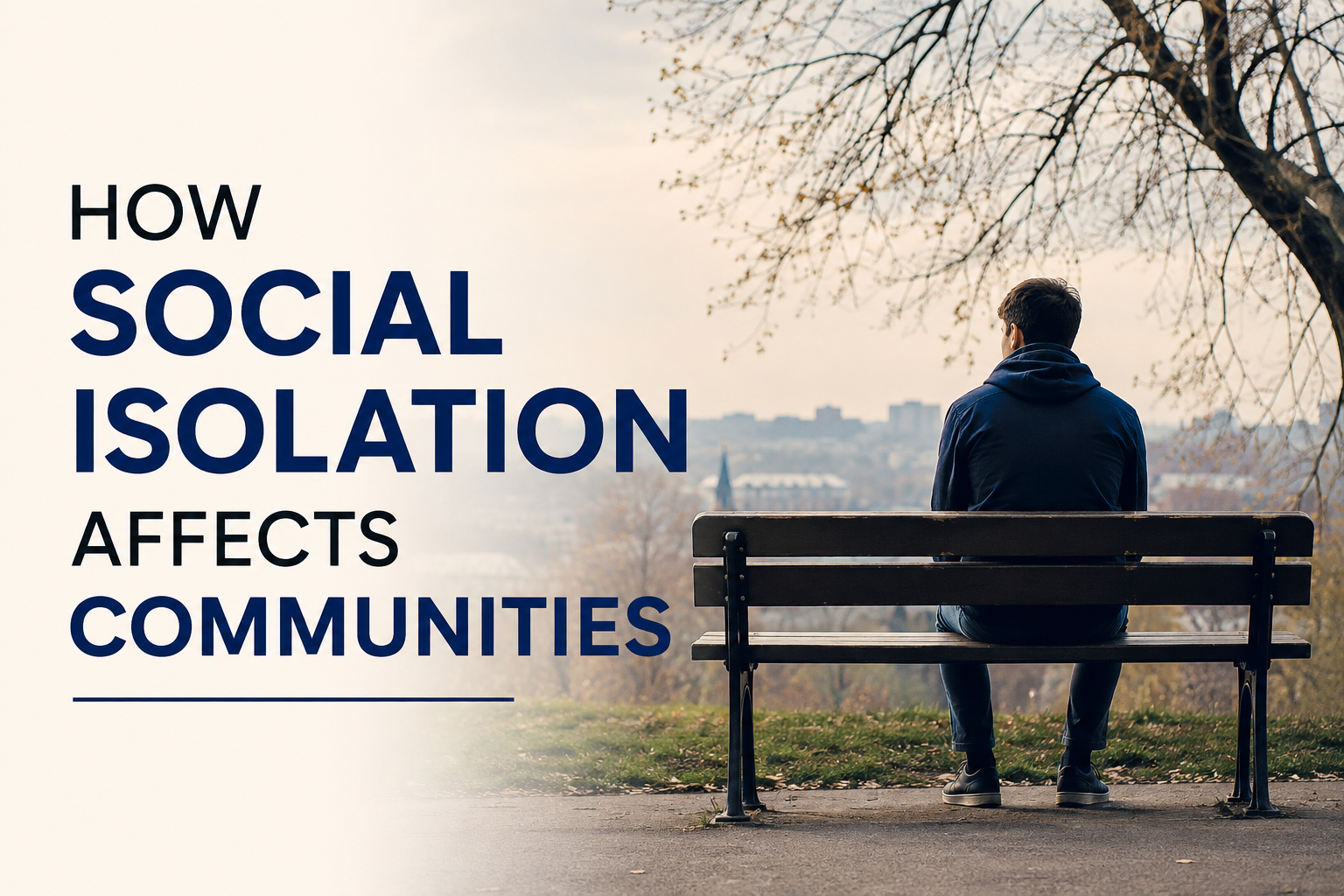
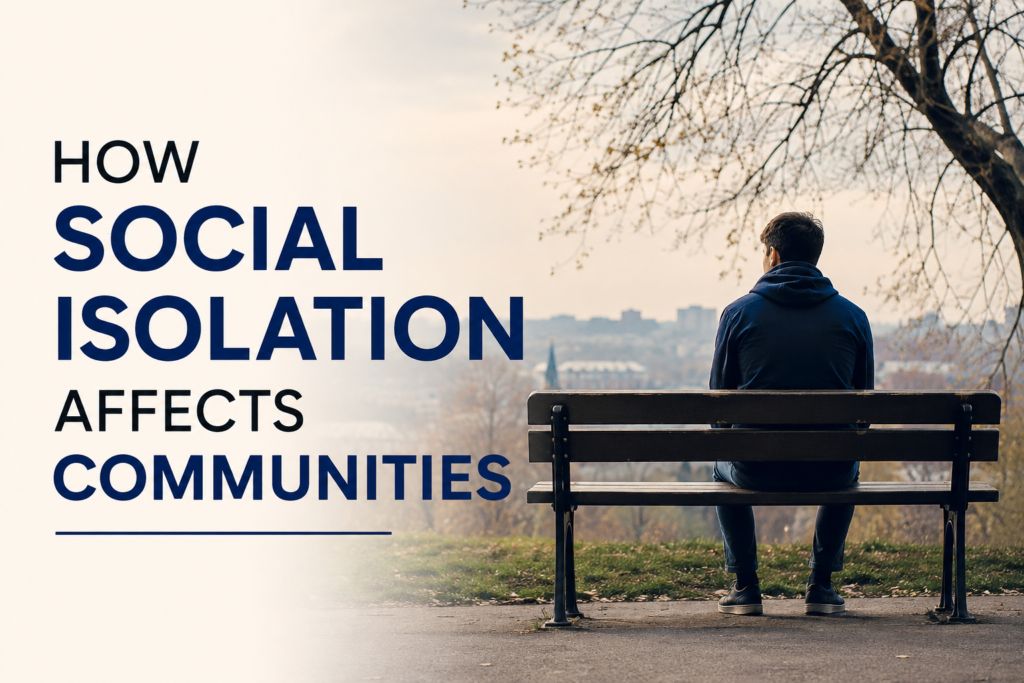
Social isolation is something I believe many communities experience without always realizing how serious it can become. We often think of isolation as something that happens to one person, but its effects can spread much further. When people stop communicating with neighbors, friends, relatives, coworkers, and other members of society, the whole community can slowly become less connected.
In my view, a strong community is not only about having houses, roads, schools, shops, and public spaces. It is also about the relationships between people. When those relationships become weak, people may feel that they are living around others but not truly living with them. This can create loneliness, mistrust, and a lack of cooperation.
What Social Isolation Really Means
Social isolation means having very little contact or interaction with other people. A person may spend most of their time alone, have few meaningful relationships, or feel disconnected from the people around them.
I think it is important to understand that being alone is not always a problem. Many people enjoy spending time by themselves, and having personal space can be healthy. The problem begins when someone wants social connection but does not have enough opportunities to build it.
Social isolation can affect older adults, young people, students, workers, parents, newcomers, and people who have recently experienced major changes in their lives. It can happen in both small towns and large cities.
Why Social Connection Matters
People naturally need some level of connection with others. We share ideas, solve problems, celebrate important moments, and support each other through difficult situations.
From my point of view, one of the biggest strengths of a community is the simple habit of people looking out for one another. A neighbor asking if everything is okay may seem like a small thing, but these small interactions can create trust over time.
When people know each other, they are often more willing to cooperate. They may help during emergencies, participate in local activities, share useful information, or support someone who is struggling.
When these connections disappear, communities can lose an important source of strength.
Social Isolation Can Increase Loneliness
One of the clearest effects of social isolation is loneliness. A person can feel lonely even when surrounded by many people. This is why simply living in a crowded area does not guarantee a strong sense of belonging.
When many individuals in a community feel lonely, the problem can become larger than an individual experience. People may stop attending local events, avoid conversations, or become less interested in meeting new people.
In my opinion, this can create a cycle. A person feels disconnected, so they avoid social situations. Because they avoid social situations, they have fewer chances to build relationships. Eventually, they may feel even more disconnected.
Breaking this cycle requires opportunities for people to interact naturally and comfortably.
Communities Can Become Less Trusting
Trust is one of the foundations of a healthy community. People need to believe that their neighbors and other community members are generally willing to cooperate and respect one another.
Social isolation can weaken this trust. When people rarely communicate, they have fewer opportunities to understand each other’s experiences. This can make unfamiliar people seem distant or even threatening.
I believe that regular interaction helps reduce unnecessary misunderstandings. A simple conversation can remind us that people have different backgrounds, challenges, opinions, and goals.
Without communication, assumptions can replace understanding.
Reduced Community Participation
Another important effect is reduced participation in community life. People who feel isolated may be less likely to attend local meetings, community events, sports activities, educational programs, cultural activities, or volunteer projects.
This matters because communities depend on participation. Local organizations need people who are willing to contribute their time and ideas.
When participation falls, fewer people may be available to organize activities, support vulnerable residents, improve public spaces, or respond to local problems.
In my view, community participation should not be seen as a responsibility belonging only to a small group of active people. Everyone should have opportunities to contribute in ways that match their interests and abilities.
Effects on Young People
Young people can also experience social isolation. School, college, and university students may spend many hours online while having fewer meaningful face to face conversations.
Technology can help people stay connected, but I do not think digital communication should completely replace real world relationships. Online conversations can be useful, but meeting people, working together, playing sports, attending clubs, and simply talking in person can create a different type of connection.
Young people need spaces where they can meet others without feeling pressured. Libraries, sports facilities, community centers, parks, educational programs, and youth clubs can all provide these opportunities.
Older Adults May Face Greater Isolation
Older adults can be particularly vulnerable to social isolation. Retirement, changes in family structures, mobility difficulties, and the loss of friends or relatives can reduce social contact.
When an older person spends most of their time alone, they may have fewer opportunities to share their experiences or participate in community activities.
I believe communities should make an effort to include older residents rather than treating them as separate from community life. Regular visits, social gatherings, neighborhood activities, and accessible public spaces can make a meaningful difference.
Sometimes what people need most is not something expensive. They simply need someone to talk to.
Social Isolation Can Affect Local Development
A community with strong relationships can often identify problems and work together to solve them. People may organize clean up activities, support local businesses, improve public spaces, or help families facing difficulties.
When people are disconnected, this collective energy can become weaker.
For example, if residents rarely communicate, they may not know that several other people are experiencing the same local problem. A problem that could have been solved through cooperation may continue for years.
This is why I believe social connection is not only an emotional issue. It can also influence how effectively a community develops.
The Role of Technology
Technology has changed the way people communicate. Social media, messaging applications, video calls, and online communities allow people to communicate across great distances.
I see technology as a useful tool, but I do not believe it can solve every form of isolation.
A person can have hundreds of online contacts and still feel that nobody truly knows them. Online communication can become meaningful when it supports genuine relationships, but it can become less helpful when it replaces almost all real world interaction.
The goal should not be to reject technology. Instead, communities should find a healthy balance between digital communication and personal interaction.
How Communities Can Reduce Social Isolation
There are many simple ways communities can encourage stronger relationships.
Local authorities and community organizations can create more welcoming public spaces. Parks, libraries, sports centers, community halls, and walking areas can give people places to meet naturally.
Community events can also help. Food festivals, cultural programs, sports competitions, educational workshops, book clubs, volunteer projects, and neighborhood gatherings can bring different groups together.
I also think local businesses can play a role. A friendly cafe, bookstore, market, or community shop can become a place where people regularly see familiar faces.
Schools can encourage students to participate in group activities, while workplaces can create opportunities for positive social interaction.
Most importantly, ordinary people can make a difference. Saying hello to a neighbor, inviting someone to join an activity, checking on an older resident, or welcoming a newcomer can be surprisingly powerful.
Building a More Connected Community
In my opinion, reducing social isolation does not require everyone to become extremely social. People have different personalities and different comfort levels. Some people enjoy large gatherings, while others prefer small conversations.
A connected community should make room for both.
The most important thing is creating opportunities for people to belong. Nobody should feel that they have to earn their place in the community before they are welcomed.
I believe small acts of kindness can gradually create a stronger social environment. When one person reaches out to another, that person may become more comfortable reaching out to someone else. Over time, these small connections can form a much stronger community network.
Conclusion
Social isolation affects more than individuals. When many people become disconnected, the entire community can experience weaker relationships, lower trust, reduced participation, and less cooperation.
From my point of view, one of the best ways to build healthier communities is to make social connection easier and more natural. We need welcoming public spaces, community activities, supportive organizations, and everyday habits that encourage people to communicate.
A strong community does not mean that everyone knows everyone. It means people feel that they belong somewhere and that there are others who care about them.
In a world where people can communicate instantly through technology, genuine human connection is still extremely important. Sometimes a simple conversation, a friendly greeting, or an invitation to join an activity can be the first step toward making someone feel included.
If communities focus more on connection, kindness, participation, and belonging, they can become places where people do not simply live beside each other but genuinely support one another.