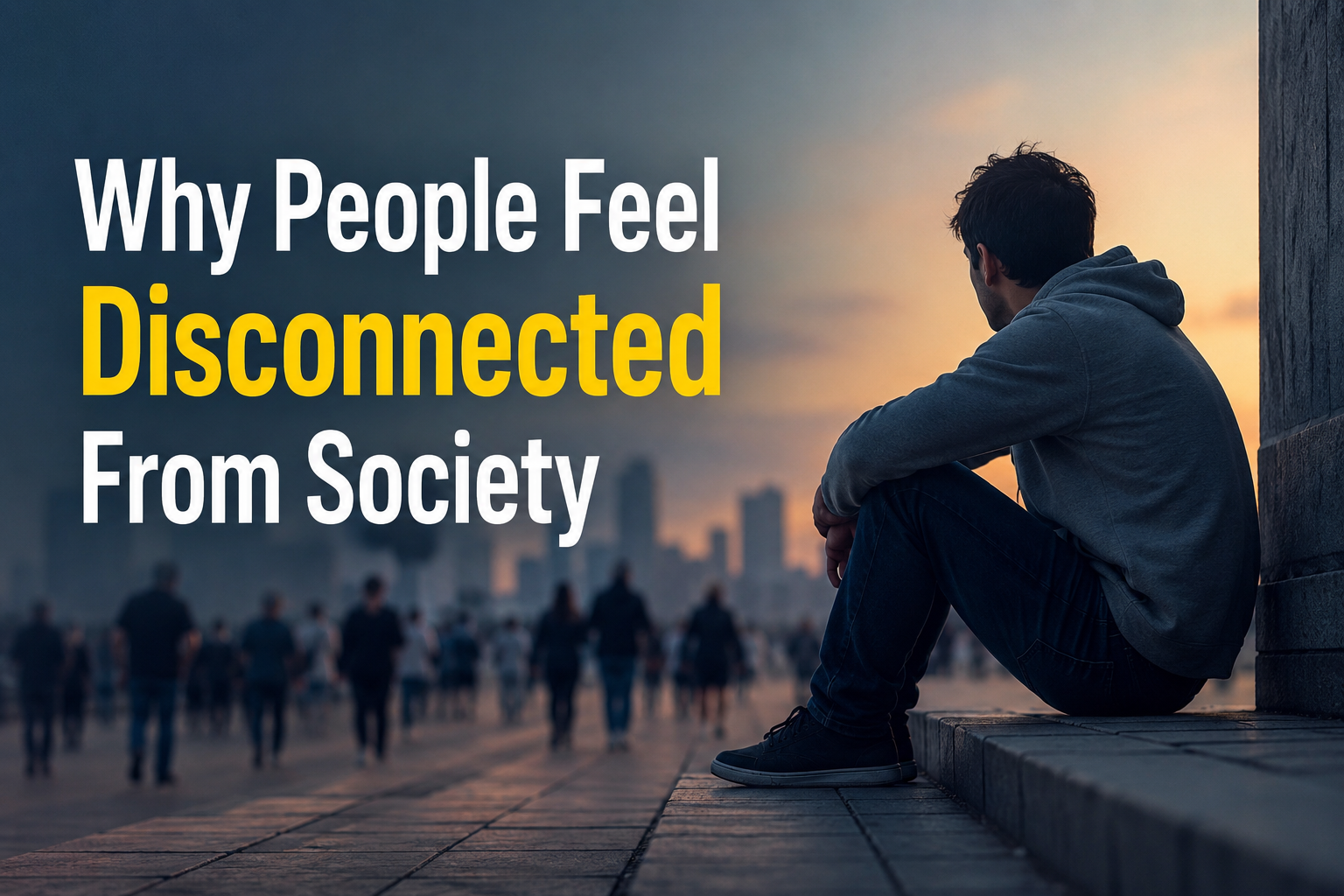
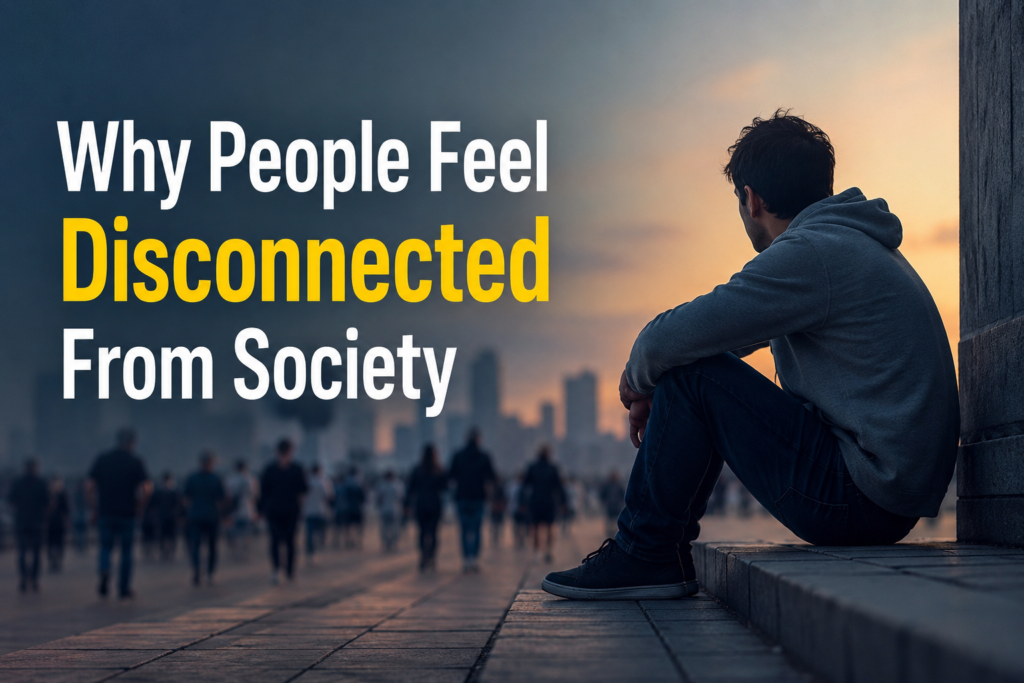
I believe one of the biggest problems people face today is not always being physically alone, but feeling disconnected even when they are surrounded by other people. We can live in a busy city, work with many colleagues, have hundreds of friends on social media, and still feel like nobody truly understands us. This kind of disconnection can be difficult to explain because, from the outside, everything may look normal.
In my opinion, feeling disconnected from society has become more common because the way we communicate, work, live, and build relationships has changed. Modern life gives us many ways to stay connected, but having more communication does not always mean having deeper relationships.
What Does Feeling Disconnected From Society Mean?
Feeling disconnected from society means feeling that you do not belong, that people do not understand you, or that you are somehow separated from the community around you. A person may attend social events, talk to coworkers, interact with family members, or use social media every day and still experience this feeling.
For me, real connection is more than simply talking to people. It is about feeling accepted, respected, heard, and valued. When these things are missing, a person can begin to feel like an outsider.
Sometimes people disconnect because they choose to spend more time alone. In other situations, they want connection but do not know how to find it. This difference is important because loneliness and chosen solitude are not always the same thing.
Social Media Can Create an Illusion of Connection
One major reason people feel disconnected today is social media. Platforms have made it easier than ever to see what other people are doing, but they can also make us feel separated from real life.
When I scroll through social media, I can see people sharing vacations, celebrations, new jobs, relationships, expensive purchases, and achievements. What we often do not see are their problems, doubts, arguments, financial struggles, or difficult days.
This can create an unrealistic picture of other people’s lives. Someone may compare their ordinary day with another person’s carefully selected best moments. Over time, this comparison can make them feel unsuccessful or excluded.
Social media can also replace meaningful conversations with quick reactions. A like or comment can create a small moment of interaction, but it does not always provide the emotional support that comes from a genuine conversation.
Busy Lifestyles Leave Little Time for Relationships
Another reason for social disconnection is that modern life can be extremely busy. People have jobs, studies, family responsibilities, financial concerns, household tasks, and personal goals.
Sometimes we genuinely care about our friends and family, but we simply do not make enough time for them.
I think this is something many people experience without realizing it. We tell ourselves that we will call someone tomorrow, meet a friend next weekend, or spend more time with family when things become less busy. Unfortunately, life often remains busy.
Relationships need regular attention. When communication becomes less frequent, emotional distance can slowly develop. Eventually, people may stop reaching out because they assume the other person is too busy.
Moving Away From Family and Friends
In the past, many people lived close to extended family members and long term friends. Today, education, employment, marriage, and better opportunities often require people to move to different cities or countries.
Moving can be exciting, but it can also remove a person from the social environment they are familiar with.
A new city may provide better career opportunities, but it can take years to build meaningful relationships there. A person may know many people at work while still having nobody they can comfortably call when they are struggling.
I believe this is one reason adults can experience loneliness even when they appear socially active.
Fear of Judgment
Sometimes people disconnect because they are afraid of being judged.
They may worry about their appearance, financial situation, career, education, family background, opinions, or personal choices. Instead of expressing themselves honestly, they may hide parts of their personality.
When someone constantly feels that they must behave differently to be accepted, genuine connection becomes difficult.
In my view, people need spaces where they can be themselves without constantly worrying about criticism. A relationship becomes meaningful when people can share their thoughts honestly and still feel respected.
Changes in Family Relationships
Family relationships can also change as society develops. Families may become smaller, and people may spend less time together because of work and other responsibilities.
Technology can sometimes make this situation more complicated. It is possible for family members to sit in the same room while everyone is looking at a different screen.
There is nothing wrong with technology itself, but I think we need to remember that digital communication should not completely replace face to face interaction.
Simple activities such as eating together, talking after dinner, visiting relatives, or spending time outdoors can help people feel connected again.
Work Does Not Always Create Community
Many people spend a large part of their lives working, so it would seem that workplaces should naturally provide social connection. However, this is not always the case.
Modern workplaces can be competitive and stressful. People may focus heavily on performance, deadlines, promotions, and financial goals.
Remote work has also changed how many people interact with coworkers. Working from home can provide flexibility, but it may reduce the casual conversations that happen naturally in an office.
A person can attend online meetings throughout the day without having a single meaningful personal conversation.
People Are Becoming More Individualistic
I also think modern culture strongly encourages individual achievement. We are often told to build our own career, improve ourselves, become financially successful, and create an independent life.
These goals can be positive, but too much focus on individual success can make community feel less important.
Humans need independence, but we also need belonging. There is value in helping neighbors, participating in community activities, maintaining friendships, and supporting people during difficult times.
A successful life should not only be measured by money or career achievements. Relationships and community also matter.
Major Life Changes Can Increase Disconnection
Life changes can make people feel disconnected from the world around them. Starting college, getting a new job, getting married, becoming a parent, ending a relationship, moving to another place, or losing someone important can completely change a person’s social environment.
During these periods, old relationships may change while new relationships have not yet developed.
I believe this is why people should not feel ashamed when they experience loneliness during major transitions. Sometimes disconnection is simply a sign that a person’s life has changed and their social world needs time to adjust.
How People Can Reconnect With Society
The good thing is that feeling disconnected does not always have to remain permanent.
The first step can be very simple. Start talking to people again.
Instead of waiting for someone else to contact you, send a message to an old friend. Ask a family member how they are doing. Invite someone for tea or coffee. Join a local group based on an interest you genuinely enjoy.
Community activities can also make a big difference. Sports, volunteering, book clubs, educational groups, religious or cultural gatherings, and neighborhood activities can provide opportunities to meet people naturally.
I also believe that people should focus on the quality of relationships rather than the number of connections. Having thousands of online followers does not necessarily mean having meaningful friendships.
One honest conversation can sometimes be more valuable than hundreds of online interactions.
We All Have a Role in Building Connection
I think society itself has a responsibility to become more welcoming. If we want people to feel connected, we cannot simply tell lonely people to make friends. Communities need to create opportunities where people can meet, participate, contribute, and feel valued.
Small actions matter. Greeting a neighbor, inviting someone into a conversation, checking on an old friend, or welcoming a new person into a group can have a bigger effect than we realize.
Sometimes people who look quiet or distant are not uninterested in connection. They may simply be waiting for someone to make the first move.
Final Thoughts
In my opinion, people feel disconnected from society for many different reasons. Technology, busy lifestyles, social media, relocation, fear of judgment, changing family structures, workplace pressures, and increasing individualism can all contribute to the problem.
However, I do not think modern society has to remain disconnected. We still have the ability to create meaningful relationships.
Real connection does not require expensive activities or a huge social circle. It can begin with a simple conversation, a shared meal, a helpful neighbor, or a friend who genuinely listens.
I believe the most important thing is to remember that connection is something we build together. If we want stronger communities, we need to become more willing to listen, understand, include, and support one another.
In the end, people do not simply want to be surrounded by others. They want to feel that they belong. They want to know that their presence matters and that someone would notice if they were gone.
That sense of belonging is one of the most important parts of a healthy society, and creating it starts with small human connections every day.