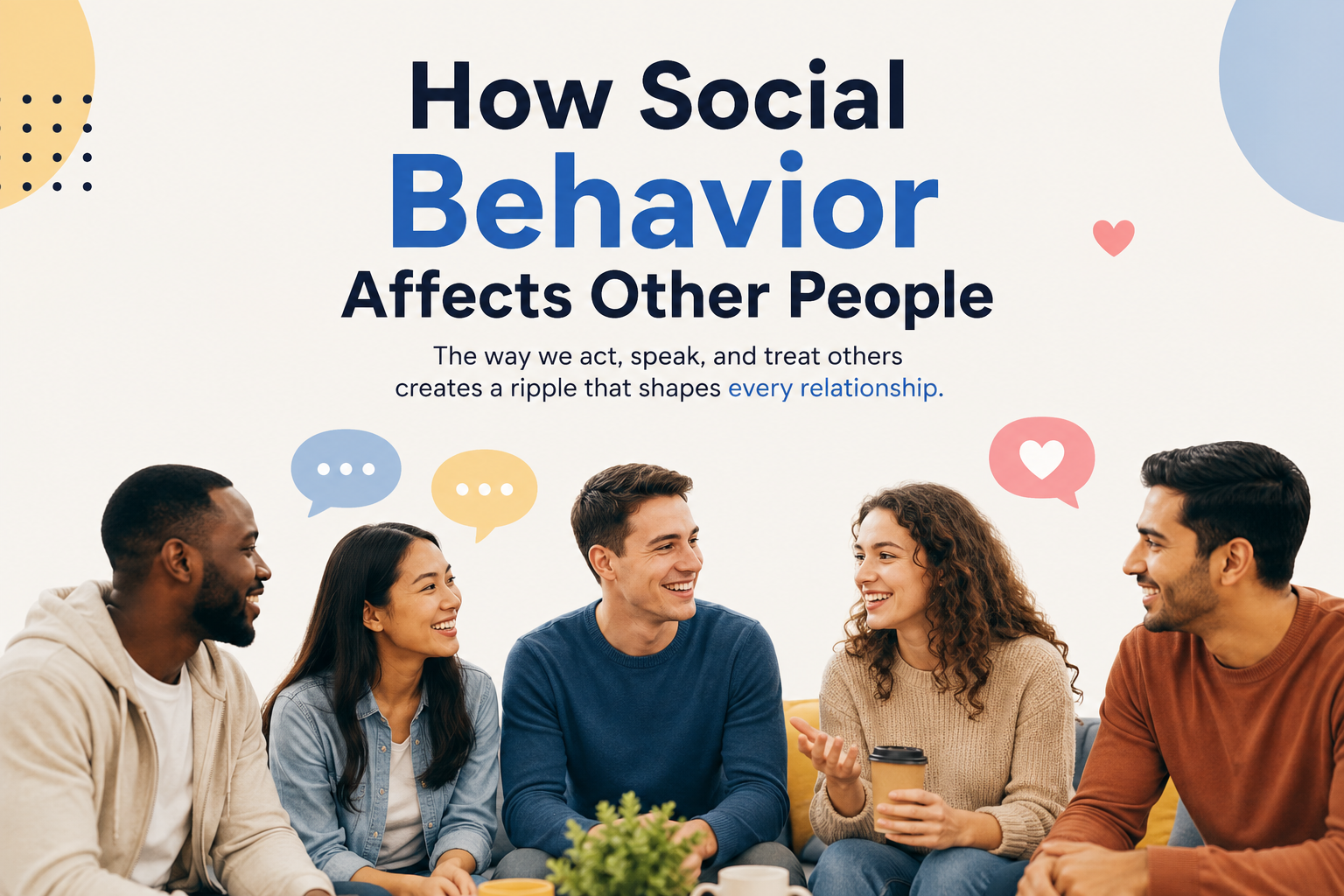
Social behavior is a part of everyday life, even when we do not think about it. The way we speak, listen, react, help, ignore, encourage, or criticize other people can have a strong effect on them. In my opinion, social behavior is one of the most important things that shapes our relationships and the environment around us. A simple smile can make someone feel welcome, while a rude comment can stay in someone’s mind for a long time.
I believe that our behavior does not affect only us. It creates a kind of ripple that reaches the people around us. When we behave positively, other people often feel more comfortable and may respond positively as well. When our behavior is negative, it can create stress, conflict, and distance. Understanding this connection can help us become more thoughtful in our daily lives.
What Is Social Behavior?
Social behavior means the way we act and communicate with other people. It includes our words, facial expressions, body language, attitude, manners, and reactions. It can be seen when we talk to family members, meet friends, work with colleagues, speak to strangers, or interact with people online.
For me, social behavior is not only about being polite. It is also about understanding that other people have feelings, opinions, problems, and experiences that may be different from ours. Good social behavior means knowing how our actions might make another person feel.
Even small actions can communicate a lot. Saying thank you can show appreciation. Listening carefully can show respect. Giving someone time to speak can make them feel valued. On the other hand, constantly interrupting someone can make that person feel ignored.
Positive Behavior Creates Positive Feelings
One of the clearest ways social behavior affects others is through emotions. When we treat people with kindness and respect, we can improve their mood and make them feel comfortable.
I have noticed that a friendly attitude can change the atmosphere of an entire conversation. When someone speaks politely and listens without judging, it becomes easier for others to open up. People usually feel safer around someone who treats them with patience.
A simple compliment can also have an unexpected impact. Someone may be having a difficult day, but a sincere positive comment can give them a little confidence. This does not mean that we can solve every person’s problems, but our behavior can make their day slightly better.
Negative Behavior Can Hurt Others
Just as positive behavior can help people, negative behavior can hurt them. Rudeness, unnecessary criticism, anger, disrespect, and selfishness can damage relationships.
Sometimes people do not realize how strongly their words affect others. A person might make a joke and think it is harmless, while the person hearing it may feel embarrassed or disrespected. This is why I think we should pay attention not only to what we intend to say but also to how our words may be received.
Repeated negative behavior can be even more damaging. If someone is constantly criticized or ignored, they may eventually lose confidence. They might stop sharing their opinions because they expect to be judged.
Social Behavior Affects Relationships
Relationships are built through repeated interactions. Whether the relationship is between friends, family members, classmates, or coworkers, behavior plays an important role.
Trust grows when people are honest, respectful, and dependable. If I know that someone listens to me and respects my feelings, I am naturally more comfortable trusting that person.
The opposite is also true. If someone frequently breaks promises, insults others, or refuses to listen, trust can slowly disappear. Once trust becomes weak, even small disagreements can become bigger problems.
I believe healthy relationships do not require perfect people. Everyone makes mistakes. What matters is how we behave after making a mistake. Being able to apologize, listen, and correct our behavior can make a relationship stronger.
Behavior Can Influence Confidence
Another important effect of social behavior is its influence on confidence. The way people treat us can affect how we see ourselves.
Encouragement can help someone believe in their abilities. For example, when a teacher encourages a student, the student may become more willing to participate and try new things. Similarly, when a friend supports us during a difficult situation, we may feel stronger.
Constant criticism can have the opposite effect. If someone is regularly told that they are not good enough, they may begin to believe it. This shows why our words should be used carefully.
In my opinion, encouragement does not mean giving false praise. It means recognizing effort, progress, and positive qualities in other people.
Social Behavior Influences Children
Children learn a lot by watching the people around them. Parents, teachers, relatives, and other adults can influence children’s social behavior through their own actions.
If children regularly see adults treating others with respect, they are more likely to learn respectful behavior. If they see people solving disagreements through calm communication, they can learn that conflicts do not always need to become arguments.
This is why adults have an important responsibility. Telling children to be polite while behaving rudely ourselves can send a confusing message. Children often learn more from what we do than from what we say.
Social Behavior in the Workplace
Our behavior also has a major effect in professional environments. A workplace can become stressful when people communicate poorly or treat each other disrespectfully.
Good communication can make teamwork easier. When coworkers listen to one another and share information clearly, problems can often be solved more quickly. Respect also makes people more comfortable expressing ideas.
I think a positive workplace does not mean everyone has to become close friends. People can have different personalities and opinions while still treating each other professionally.
Simple actions such as greeting coworkers, listening during meetings, giving credit to others, and offering help can contribute to a healthier working environment.
Social Media and Online Behavior
Social behavior is not limited to face to face communication. It is also extremely important online.
People sometimes behave differently on social media because they are not physically standing in front of the person they are talking to. This can make it easier to write harsh comments or make judgments without thinking about the consequences.
I believe we should remember that there is a real person behind every account. A comment may take only a few seconds to write, but its effect can last much longer.
Being respectful online means thinking before posting, avoiding unnecessary arguments, and understanding that people can have different opinions. We do not have to agree with everyone, but disagreement does not require disrespect.
Small Acts Can Create Big Changes
One thing I find interesting about social behavior is that small actions can sometimes have surprisingly large effects.
Holding a door open, helping someone carry something, thanking a worker, listening to a friend, or simply asking someone how they are doing may seem unimportant. However, these actions communicate that other people matter.
When people experience kindness, they may be more likely to show kindness to someone else. In this way, one positive action can continue from one person to another.
This is why I believe improving society does not always require huge actions. Sometimes it starts with how we treat the person standing next to us.
Understanding Other People’s Feelings
Good social behavior also requires empathy. Empathy means trying to understand what another person may be feeling or experiencing.
We cannot always know what someone is going through. A person who seems quiet may be dealing with a personal problem. Someone who appears impatient may simply be having a difficult day.
This does not mean we should excuse every type of bad behavior. Instead, it means we should avoid making quick judgments when we do not know the full situation.
When we practice empathy, we become more careful with our reactions. We may choose to listen instead of immediately becoming angry.
How We Can Improve Our Social Behavior
Improving social behavior starts with awareness. I think the first step is to pay attention to how our actions affect other people.
We can start by listening more carefully. Instead of thinking about what we want to say next, we can actually focus on what another person is saying.
We can also become more aware of our tone. Sometimes the words themselves are not offensive, but the way we say them can make them sound rude.
Another useful habit is to think before reacting. When someone annoys us, taking a moment before responding can prevent unnecessary conflict.
Finally, we should learn to apologize when we are wrong. An honest apology does not make a person weak. In my view, it shows maturity and respect.
Conclusion
Social behavior affects other people in many ways, from their emotions and confidence to their relationships and overall sense of belonging. Our behavior can make someone feel respected, valued, and supported, or it can make them feel ignored, hurt, or uncomfortable.
I believe we often underestimate the power of our everyday actions. A kind word, a patient response, or a simple act of respect may seem small to us, but it can mean a lot to another person.
We cannot control how everyone behaves, but we can control our own behavior. If we become more thoughtful about the way we speak, listen, react, and treat others, we can create healthier relationships and more positive surroundings.
For me, good social behavior is not about being perfect. It is about making a genuine effort to understand other people and treating them with the same basic respect that we would want for ourselves. When more people make that effort, the effect can spread through families, workplaces, communities, and society as a whole.