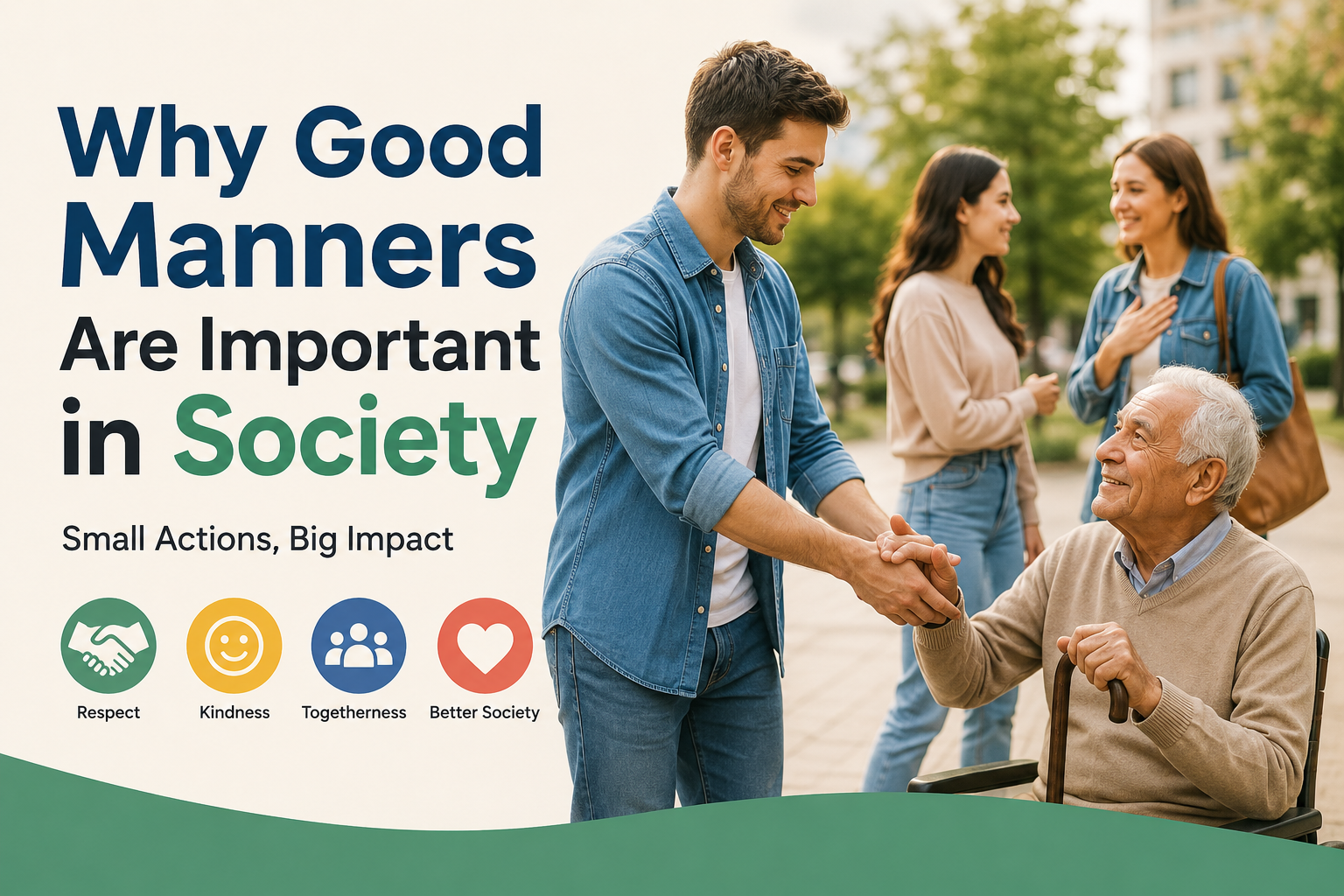
Good manners are one of the simplest things we can practice in our daily life, but I believe they have a much bigger impact than we often realize. We may think that saying “please,” “thank you,” “sorry,” or greeting someone politely is just a small part of our behavior. In reality, these simple actions can change the way people feel, communicate, and live together. A society where people treat each other with respect and kindness is usually more peaceful, friendly, and enjoyable.
In my opinion, good manners are not about showing off or trying to look perfect in front of others. They are about understanding that every person deserves respect. Whether I am talking to a family member, a friend, a teacher, a coworker, a shopkeeper, or a stranger, my behavior can affect that person’s mood. A few kind words can make someone’s day better, while rude behavior can create unnecessary stress and conflict.
What Are Good Manners?
Good manners are the habits and behaviors that show respect, consideration, and kindness toward other people. They include speaking politely, listening when someone is talking, helping others, respecting personal space, being patient, and using appropriate language.
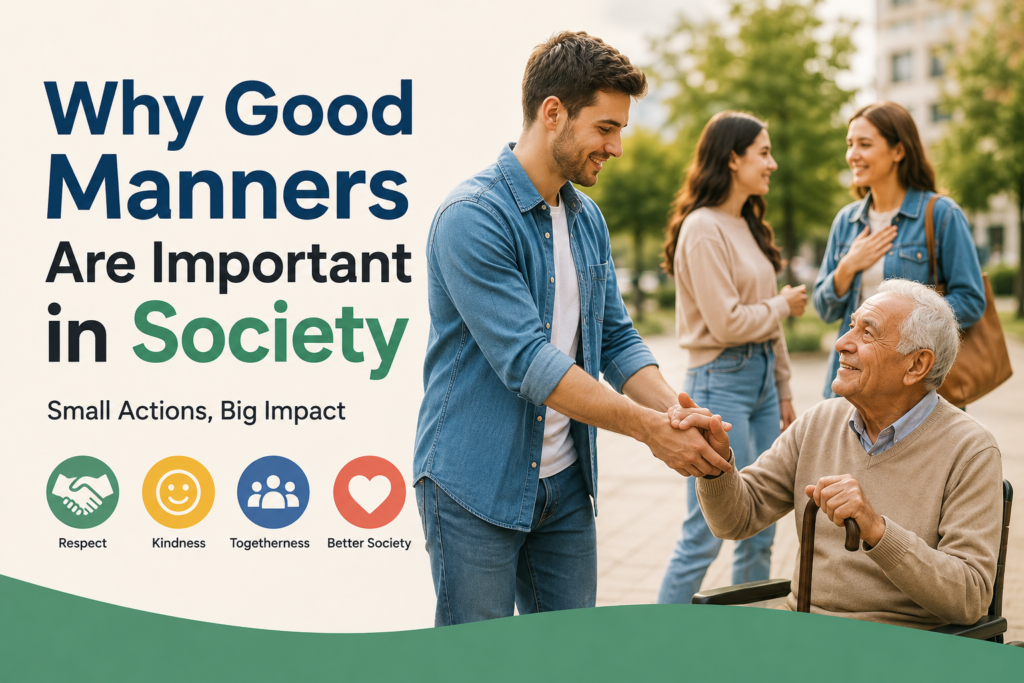
For me, good manners are not limited to formal situations. They should be part of everyday life. For example, holding a door open for someone, giving an elderly person a seat, saying thank you after receiving help, or simply listening carefully when someone shares an opinion can all be examples of good manners.
Good manners also mean knowing when to apologize. Nobody is perfect, and we all make mistakes. When I realize that I have hurt someone or behaved incorrectly, saying sorry shows that I understand my mistake and respect the other person’s feelings.
Good Manners Create Respect
One of the biggest reasons good manners are important is that they create mutual respect. When I treat people respectfully, they are more likely to treat me with respect in return.
Respect is necessary in every relationship. Families need it, friendships need it, workplaces need it, and communities need it. Without respect, even simple conversations can turn into arguments.
I believe that respect does not depend on someone’s age, job, education, wealth, or social position. Every person deserves basic dignity. Good manners remind us of this important idea.
For example, speaking politely to a waiter is just as important as speaking politely to a manager. Being respectful to a child is just as important as being respectful to an adult. Our manners show our character, especially when we are dealing with people who cannot offer us anything in return.
Good Manners Improve Communication
Communication becomes much easier when people use good manners. When I speak politely and listen carefully, other people are more comfortable sharing their thoughts with me.
Many disagreements happen because people do not listen to each other. Sometimes we become impatient and interrupt someone before they finish speaking. At other times, we respond angrily without understanding what the other person meant.
Good manners encourage patience. They teach us to listen before responding and to express our opinions without insulting others.
This does not mean that we must agree with everyone. People naturally have different opinions, beliefs, experiences, and personalities. Good manners simply help us disagree respectfully.
I think being able to disagree without becoming rude is one of the most valuable social skills a person can develop.
Good Manners Make Society More Peaceful
A society is made up of millions of individual interactions. Every conversation, meeting, visit, and public interaction contributes to the overall environment.
If people are constantly rude, aggressive, impatient, and disrespectful, daily life becomes stressful. Small disagreements can quickly become serious conflicts.
On the other hand, when people practice patience and kindness, many problems can be solved peacefully.
Something as simple as allowing another person to speak, waiting patiently in a line, respecting traffic rules, or apologizing after making a mistake can prevent unnecessary conflict.
In my view, peace in society does not only come from governments, laws, or institutions. It also comes from the everyday behavior of ordinary people.
Good Manners Build Strong Relationships
Relationships become stronger when people feel valued and respected. Good manners help create that feeling.
In a family, saying thank you and showing appreciation can make relationships warmer. With friends, listening to their problems and respecting their feelings can build trust. At work, treating colleagues politely can create a more positive environment.
I have noticed that people generally remember how we make them feel. They may forget the exact words we used, but they often remember whether we treated them kindly or disrespectfully.
This is why small acts of kindness matter. A sincere compliment, a polite greeting, or an offer to help may seem insignificant, but these actions can strengthen relationships over time.
Good Manners Teach Children Important Values
Children learn a lot by observing adults. If parents, teachers, and older family members practice good manners, children are more likely to develop the same habits.
Teaching children to say please and thank you is useful, but good manners should go beyond these words. Children should also learn to listen, share, wait for their turn, respect others, and apologize when they make mistakes.
I believe children who learn these values early are better prepared to interact with different people as they grow older.
Schools also have an important role. Education is not only about books, exams, and grades. Students also need to learn how to communicate respectfully and cooperate with others.
Good Manners Matter at Work
The workplace is another place where manners are extremely important. People from different backgrounds and personalities often work together, so respectful behavior can make a major difference.
Being punctual, listening to coworkers, responding politely, respecting other people’s ideas, and accepting constructive criticism are all examples of professional manners.
A person may have excellent skills, but poor behavior can make it difficult for others to work with them. In contrast, someone who is respectful and cooperative can create a positive atmosphere around them.
In my opinion, professionalism is not only about how well someone performs a task. It is also about how they treat the people around them.
Good Manners Help Us Handle Differences
Modern society includes people with different cultures, traditions, languages, lifestyles, and opinions. We cannot expect everyone to think exactly like us.
Good manners help us live with these differences.
Being polite does not mean giving up our own beliefs. It means understanding that other people have the right to their own views. We can discuss differences without insulting or humiliating each other.
This kind of behavior is especially important today because people communicate with others from all over the world through social media and the internet.
A respectful attitude can help reduce misunderstandings and encourage better conversations.
Good Manners Are Important Online Too
I believe manners should not disappear when we go online. Unfortunately, people sometimes behave more aggressively on the internet because they are not speaking face to face.
Social media comments, messages, online discussions, and emails should also be handled respectfully.
Before posting something, it is useful to think about how our words might affect another person. We should avoid unnecessary insults, personal attacks, and offensive comments.
Being behind a screen does not remove our responsibility to treat people with dignity.
Good online manners can make digital communities more useful, welcoming, and productive.
Good Manners Can Improve Our Own Personality
Good manners do not only benefit other people. They can also improve us as individuals.
When I practice patience, kindness, and respect, I become more aware of how my behavior affects others. Over time, these habits can make me more confident and emotionally mature.
A person with good manners usually knows how to behave in different situations. They can communicate with strangers, handle disagreements, and adapt to different social environments.
I think this makes good manners an important part of personal development.
Small Actions Can Make a Big Difference
Sometimes we believe that changing society requires doing something huge. However, I think positive change can begin with very small actions.
Saying good morning to someone, thanking a person for their help, helping someone carry something, giving someone your attention, or allowing another person to go first can all spread positivity.
One kind action can influence another person to behave kindly toward someone else. In this way, good manners can create a chain reaction.
We may never know how much a small act of kindness means to another person. That is why I believe we should practice good manners even when nobody is watching.
Conclusion
Good manners are important because they make everyday life more respectful, peaceful, and pleasant. They improve communication, strengthen relationships, teach children valuable lessons, support healthy workplaces, and help people deal with differences.
For me, good manners are not about being perfect. They are about making an honest effort to consider other people’s feelings and treat them with dignity.
Society is built from individual actions. If each person makes an effort to be a little more patient, polite, respectful, and kind, the environment around us can gradually improve.
We do not need special qualifications to practice good manners. We only need awareness and consideration. A simple “please,” “thank you,” or “sorry” may take only a few seconds, but these words can have a lasting effect.
I believe that good manners are one of the easiest ways to make our homes, schools, workplaces, communities, and society better. When respect becomes a normal part of our daily behavior, everyone has a better chance to feel valued and understood.