
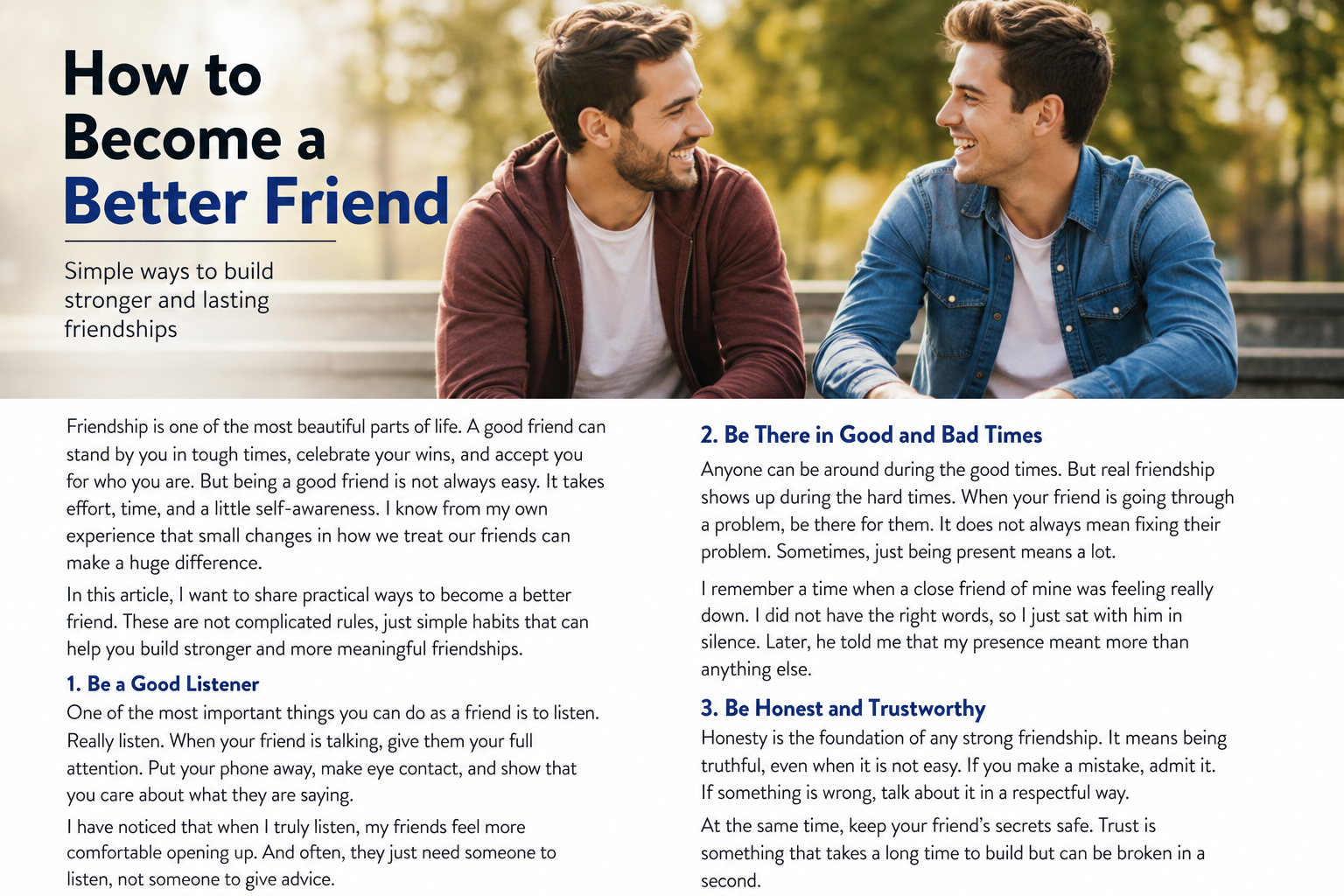
Friendship is one of the most valuable relationships we can have in life. A good friend can make ordinary days more enjoyable, support us when life becomes difficult, and celebrate our happiness without jealousy. At the same time, being a good friend is not only about having fun together. It is also about understanding, trust, respect, patience, and being present when your friend really needs you.
I believe becoming a better friend does not require a complete change in personality. Small improvements in the way we communicate and treat people can make a big difference. From my point of view, a strong friendship grows when both people feel respected, understood, and valued.
Listen When Your Friend Talks
One of the simplest ways to become a better friend is to learn how to listen properly. Many people listen only because they are waiting for their turn to speak. Real listening is different. It means paying attention to what your friend is saying and trying to understand how they feel.
When my friend is talking about a problem, I try not to immediately interrupt with my own story. Sometimes people do not need advice. They simply want someone who will listen without judging them.
Putting your phone away, making eye contact, and responding thoughtfully can show that you genuinely care. Even a short conversation can become meaningful when the other person feels heard.
Be There During Difficult Times
It is easy to be a friend when everything is going well. The real test of friendship often comes when life becomes difficult.
If your friend is dealing with stress, disappointment, failure, or another personal problem, try to be available. You do not always need to solve the problem. Sometimes sitting with someone, checking on them, or simply saying that you are there can mean a lot.
I have learned that people often remember who stood beside them during difficult moments. A small message such as asking how they are doing can make someone feel less alone.
Celebrate Your Friend’s Success
A good friend should not feel threatened by another person’s success. Instead, their success should be something worth celebrating.
When your friend gets a new job, achieves a personal goal, passes an exam, starts a new project, or reaches another milestone, congratulate them sincerely. Do not compare their achievements with your own life.
In my opinion, true friendship becomes stronger when friends can celebrate each other without competition. Everyone has a different journey, and there is enough room for both people to grow.
Be Honest but Respectful
Honesty is an important part of friendship, but honesty should not be used as an excuse to hurt someone’s feelings.
If your friend asks for your opinion, give an honest answer while remaining respectful. Think about how your words might affect them before you speak.
For example, if your friend is making a decision that you believe could cause problems, you can explain your concerns calmly instead of criticizing them. A good friend tells the truth because they care, not because they want to prove that they are right.
I believe honest conversations can prevent many misunderstandings. When friends know they can trust each other, the relationship becomes much more comfortable.
Keep Your Friend’s Trust
Trust can take a long time to build and only a moment to lose. If a friend shares something personal with you, treat that information with respect.
Do not share private conversations with other people simply because you think the story is interesting. If someone trusts you with their feelings or personal experiences, that trust should be protected.
Being trustworthy also means keeping promises whenever possible. If you say that you will do something, try your best to follow through. If you cannot keep your promise, explain the situation honestly instead of disappearing.
Make Time for Your Friends
Life can become busy with work, studies, family responsibilities, and personal goals. However, friendships also need time.
You do not have to meet your friends every day. Even a short phone call, message, or occasional meeting can keep the relationship alive.
I have noticed that friendships can become distant when both people constantly say they are too busy. Sometimes we have to make a little effort and create time for the people who matter to us.
You can have a simple conversation, take a walk together, share a meal, or just sit and talk. Friendship does not always require expensive plans or special activities.
Remember the Small Things
Small details can show someone that you genuinely care about them.
Remembering your friend’s birthday, an important exam, a job interview, or something they told you weeks ago can make them feel appreciated. You do not have to do something expensive or dramatic.
A simple message asking about something important in their life can be enough.
Personally, I think these small acts often matter more than big gestures because they show that you actually pay attention.
Respect Personal Boundaries
Being a close friend does not mean you have to be involved in every part of someone’s life. Everyone needs personal space.
Your friend may sometimes want to spend time alone, focus on work, or deal with a personal issue privately. Respecting that space is an important part of a healthy friendship.
Do not pressure your friend to share something they are not comfortable discussing. Give them time when they need it.
At the same time, boundaries should work both ways. A healthy friendship allows both people to have their own interests, responsibilities, and relationships.
Avoid Constant Judgment
Nobody is perfect. Everyone makes mistakes and has moments when they do things they later regret.
A good friend should be able to point out mistakes without constantly judging the person. There is a difference between helping someone and making them feel worthless.
If your friend makes a mistake, try to understand the situation before criticizing them. Ask questions and listen to their side.
I believe people are more likely to improve when they feel supported rather than attacked.
Learn to Apologize
Even the best friends have disagreements. Sometimes you will say something wrong, misunderstand a situation, or accidentally hurt your friend’s feelings.
When you realize that you made a mistake, apologize sincerely.
A real apology does not need complicated words. Simply accepting responsibility and saying that you are sorry can be powerful.
Do not make every apology about explaining why you were right. If you hurt someone, acknowledge their feelings.
I think learning to apologize is one of the most important parts of becoming a mature friend.
Do Not Keep Score
Friendship should not feel like a business transaction. You should not constantly calculate who called first, who paid for lunch, or who helped the other person more.
Of course, friendships should have balance, but balance does not always happen every single day.
There may be times when your friend needs more support, while at another time you may need more support yourself. What matters is the overall relationship and the willingness of both people to care for each other.
Communicate When Something Is Wrong
Ignoring problems rarely makes them disappear. If something is bothering you, talk about it calmly.
Maybe your friend said something that hurt you, forgot an important promise, or you feel that the friendship has become distant. Instead of silently becoming angry, explain how you feel.
Use respectful words and give your friend a chance to explain their side.
Good communication can prevent small misunderstandings from becoming major problems.
Accept That People Change
People change as they grow older. Their interests, priorities, jobs, responsibilities, and lifestyles can all change.
Sometimes friends who were extremely close during one period of life may not talk every day later. That does not always mean the friendship has failed.
I think a mature friendship allows people to grow without demanding that they remain exactly the same.
You can support your friend’s growth even when their life takes a different direction from yours.
Be Yourself
Finally, becoming a better friend does not mean pretending to be someone you are not.
Good friendships are built on authenticity. You should be able to laugh together, discuss serious topics, share your opinions, and feel comfortable being yourself.
At the same time, being yourself does not mean ignoring other people’s feelings. The goal is to remain genuine while treating your friends with kindness and respect.
Final Thoughts
Becoming a better friend is not about being perfect. It is about making a consistent effort to care, listen, communicate, and support the people who matter to you.
From my point of view, the strongest friendships are usually built through simple things. Being available when someone needs you, remembering the little details, keeping private information safe, celebrating their achievements, and saying sorry when you are wrong can make a huge difference.
Friendship is something that grows through everyday actions. If we want better friendships, we also need to become better friends ourselves.
You do not have to change everything at once. Start with one simple habit. Listen more carefully. Make time for someone. Send a message to an old friend. Celebrate someone’s success. Or simply ask a friend how they are doing and genuinely listen to the answer.
Small efforts can create strong connections, and strong friendships can make life feel happier, more meaningful, and less lonely.