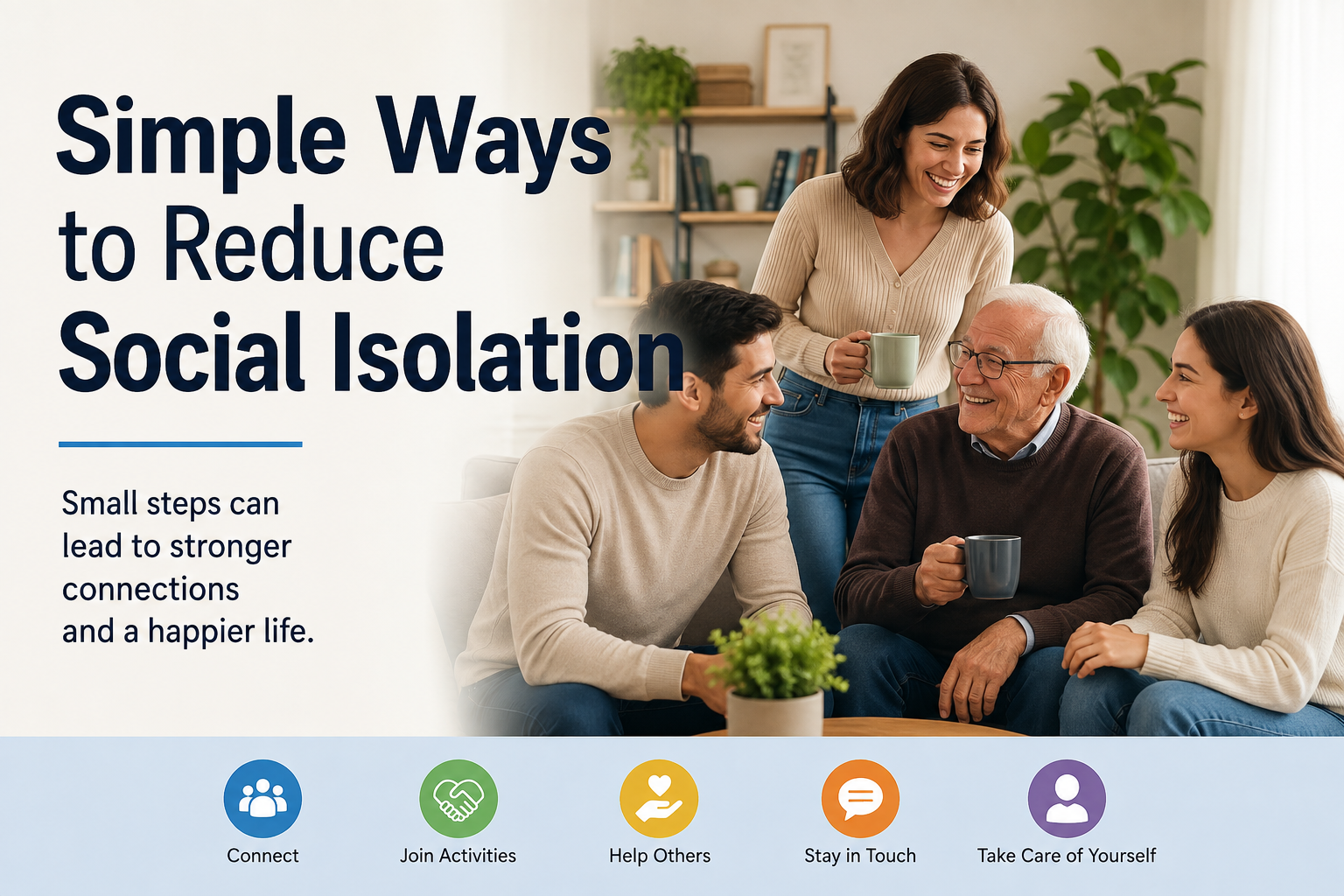
Social isolation is something many people experience at different stages of life. A person can be surrounded by family, classmates, coworkers, or neighbors and still feel completely alone. In my opinion, social isolation is not always about having no one around. Sometimes it is about feeling that there is nobody with whom we can genuinely talk, share our thoughts, or spend meaningful time.
Modern life has made it easier to communicate, but it has not always made people feel more connected. We can send messages within seconds, join online communities, and follow hundreds of people on social media, yet still experience loneliness. I believe that reducing social isolation does not always require huge changes. Small and regular efforts can make a meaningful difference.
In this article, I want to share some simple ways that can help people build stronger social connections and feel less isolated.
Understand What Social Isolation Really Means
Before trying to reduce social isolation, I think it is important to understand what it actually means. Social isolation can happen when a person has very little contact with other people or does not participate in social activities. Loneliness is slightly different because it describes the personal feeling of being disconnected.
Someone may spend most of the day alone because of work, studies, retirement, relocation, or personal circumstances. Another person may have many contacts but still feel lonely because those relationships do not feel meaningful.
Understanding this difference can help us approach the problem with more patience. Instead of blaming ourselves for feeling isolated, we can look for small opportunities to create better connections.
Start With One Person
One of the easiest ways I believe we can reduce isolation is by connecting with one person. We do not need to suddenly become extremely social or attend large gatherings.
A simple message to an old friend can be a good beginning. We can ask someone how they are doing, share something interesting, or simply suggest having a cup of tea together.
Sometimes we wait for other people to contact us first. I have found that taking the first step can be surprisingly powerful. Even a short conversation can make a person feel remembered and valued.
The important thing is consistency. One meaningful conversation every few days can be more valuable than trying to meet dozens of people at once.
Spend More Time With Family
Family relationships can provide an important source of connection. However, simply living in the same house does not always mean that people are emotionally connected.
I think spending intentional time with family can make a big difference. This could mean eating a meal together, taking a short walk, watching a program, discussing the day, or helping with something around the house.
The activity itself does not have to be special. What matters is giving people our attention.
Putting the phone away during a conversation can also make a simple interaction feel more meaningful. Sometimes people do not need advice or solutions. They simply want someone to listen.
Reconnect With Old Friends
Life often becomes busy, and friendships can slowly become distant. People move to different cities, change jobs, get married, start families, or become focused on personal responsibilities.
However, an old friendship does not always have to disappear permanently.
If there is someone I have not spoken to for a long time, I can send a simple message without making the situation complicated. Saying something like “I was thinking about you and wanted to see how you are doing” can reopen a conversation.
The response may not always be what we expect, but reaching out can still be worthwhile. Sometimes both people are waiting for the other person to make the first move.
Join a Local Activity
Another practical way to reduce social isolation is to participate in activities where people naturally come together.
This could be a sports group, book club, walking group, community activity, class, volunteer program, hobby group, or local event.
I personally think shared activities make meeting people easier because there is already something to talk about. Instead of walking into a room and wondering what to say, everyone is there for a common reason.
You do not need to become close friends with everyone. Even regularly seeing familiar faces can create a feeling of belonging.
Volunteer and Help Others
Helping other people is another simple way to create social connections. Volunteering can introduce us to people who share similar values and interests.
There are many ways to help. Someone can participate in a community project, help at a local organization, support an educational activity, assist elderly people, or simply help a neighbor.
In my view, volunteering has an additional benefit because it gives us a sense of purpose. When we contribute something useful to other people, we can feel that our presence matters.
Even small acts of kindness can create opportunities for conversation and friendship.
Make Phone Calls Instead of Only Texting
Technology is useful, but written messages do not always provide the same feeling as hearing someone’s voice.
A short phone call can feel much more personal than a few text messages. We can call a family member, an old friend, or someone we have not spoken with recently.
Video calls can also be useful when people live far away.
I am not saying that texting is bad. It is convenient and helpful. But sometimes replacing a few messages with a five minute conversation can make the relationship feel warmer.
Get Out of the House Regularly
Staying indoors for long periods can sometimes make isolation feel stronger. Getting outside creates opportunities to see people, even when we do not have a planned social activity.
A person can take a walk, visit a library, sit in a public park, go shopping, attend a local event, or spend some time at a nearby cafe.
These activities may seem very ordinary, but regular exposure to other people can help break a cycle of staying alone.
The goal does not have to be meeting someone every time. Simply changing the environment can improve our daily routine and create unexpected opportunities for interaction.
Use Social Media More Carefully
Social media can help people stay connected, but I believe the way we use it matters.
Scrolling through other people’s posts for hours can sometimes make us feel more disconnected, especially when it seems that everyone else is enjoying a perfect life.
Instead of only consuming content, we can use social platforms to communicate. We can comment thoughtfully, send a personal message, join an interest based group, or arrange an actual conversation.
For me, social media works best when it supports real relationships instead of replacing them completely.
Develop a Hobby
Having a hobby can make life more enjoyable and can also create opportunities to meet people.
Cooking, photography, gardening, reading, drawing, fitness, music, crafts, gaming, or learning a language are just a few examples.
A hobby gives us something to look forward to. It can also give us something to discuss with other people.
Joining an online or offline community around a hobby can make this even more useful. When people share an interest, conversations often happen naturally.
Be a Good Listener
Building relationships is not only about talking. Listening is equally important.
When someone shares something with us, giving them our full attention can make them feel respected. We do not always need to solve their problems. Sometimes simply listening without interrupting is enough.
I think good listening can strengthen even simple friendships because people remember how they felt during a conversation.
If we want deeper relationships, we should try to become people with whom others feel comfortable sharing their thoughts.
Create Small Social Habits
One mistake people can make is expecting immediate transformation. Reducing social isolation usually takes time.
Instead of setting a goal to become highly social, I would recommend creating small habits.
For example, we can call one person each week, attend one community activity, have one meal with family without phones, or spend some time outside each day.
Small habits are easier to maintain. Over time, these actions can create a stronger sense of connection.
Be Patient With Yourself
Social isolation can sometimes make people believe that something is wrong with them. I do not think this is helpful.
People go through different periods in life. There may be times when we are surrounded by friends and other times when our social circle becomes smaller.
The important thing is not to give up completely.
If starting conversations feels uncomfortable, begin with something very small. If large gatherings feel overwhelming, choose a quieter activity. If an old friendship cannot be restored, focus on creating a new connection.
There is no single correct way to become more socially connected.
Reach Out When Isolation Becomes Overwhelming
Sometimes social isolation can become very difficult to manage alone. If a person feels persistently disconnected, hopeless, or unable to cope with daily life, talking with a trusted person or qualified professional can be an important step.
Asking for support is not a weakness. In my opinion, it is actually a sign that someone recognizes the importance of taking care of themselves.
Friends and family can also play an important role by noticing when someone is withdrawing and gently inviting them to participate.
Final Thoughts
I believe reducing social isolation starts with small human actions. We do not need hundreds of friends or a busy social calendar to feel connected. One honest conversation, one phone call, one shared meal, or one kind gesture can be a meaningful beginning.
The most important thing is to keep making small efforts. Reach out to someone, spend time with family, join an activity, help another person, develop a hobby, and make space for real conversations.
In today’s busy world, it is easy to become disconnected without realizing it. That is why I think we should make connection an intentional part of our lives.
Sometimes the simplest step is also the most powerful one. Saying hello, asking someone how they are doing, or inviting them for a conversation may seem like a small thing, but for someone experiencing isolation, it can mean much more than we realize.