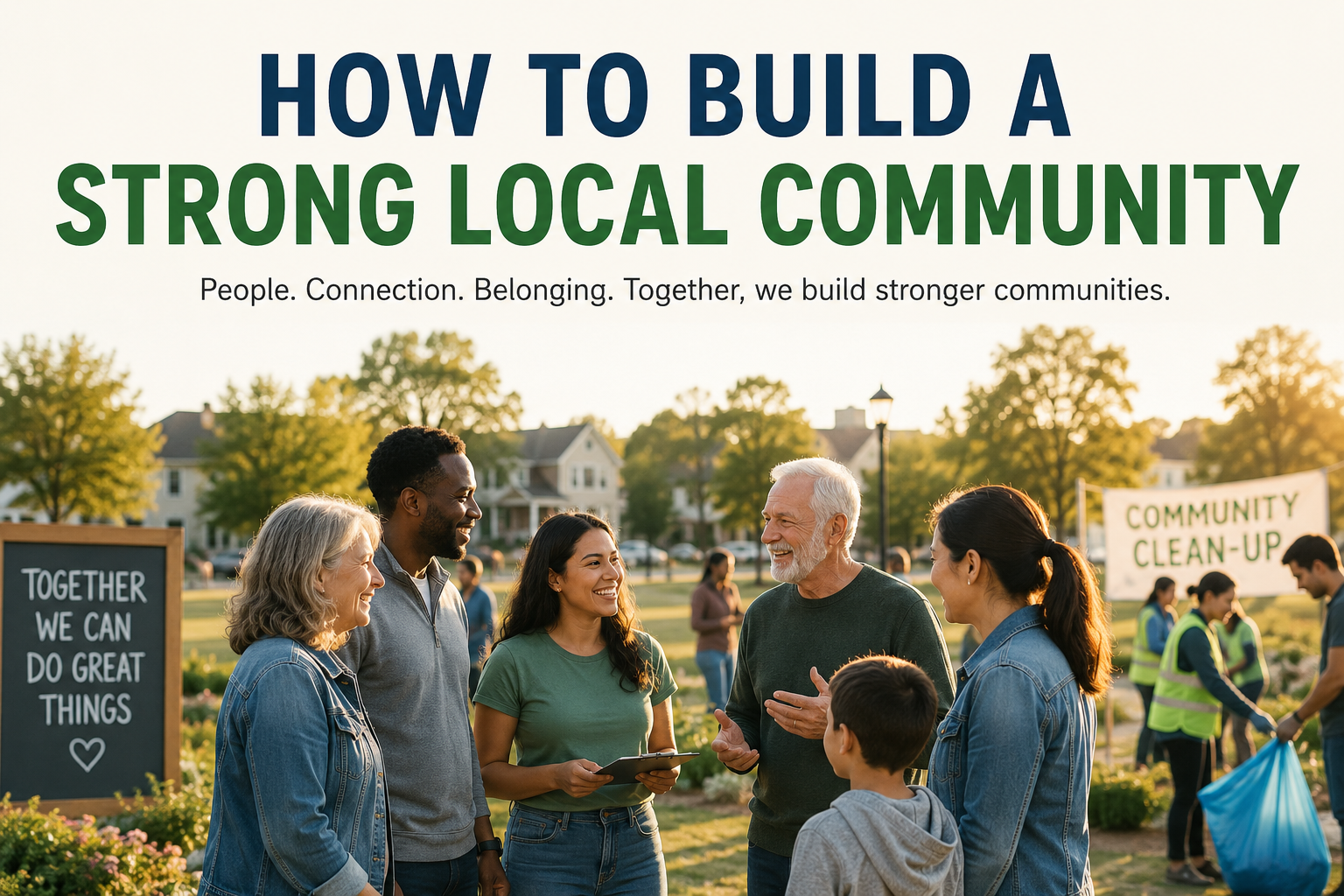
I believe a strong local community is one of the most valuable things people can have around them. When neighbors know each other, help each other, and communicate openly, everyday life becomes easier and more enjoyable. A community does not become strong simply because many people live in the same area. It becomes strong when people feel connected and are willing to support one another.
In my opinion, building a strong local community does not require a huge budget or complicated plans. Small actions can create meaningful changes when people work together. Whether it is organizing a neighborhood activity, helping an elderly neighbor, supporting a local business, or simply taking time to talk to people, every positive action matters.
Get to Know Your Neighbors
The first step I would recommend is getting to know the people who live around you. Many people live in the same neighborhood for years without knowing the names of their neighbors. This can create a sense of distance even when everyone lives very close together.
A simple introduction can make a big difference. You can start by saying hello when you see someone outside or having a short conversation while walking around the neighborhood. You do not need to become close friends with everyone. Just knowing who lives nearby can create a better feeling of connection.
When neighbors know each other, they are also more likely to communicate when something important happens. They can share useful information, look after each other’s homes when someone is away, and offer help during difficult situations.
Create Regular Community Activities
I think regular activities are one of the best ways to bring people together. A community becomes more connected when people have opportunities to meet outside their normal routines.
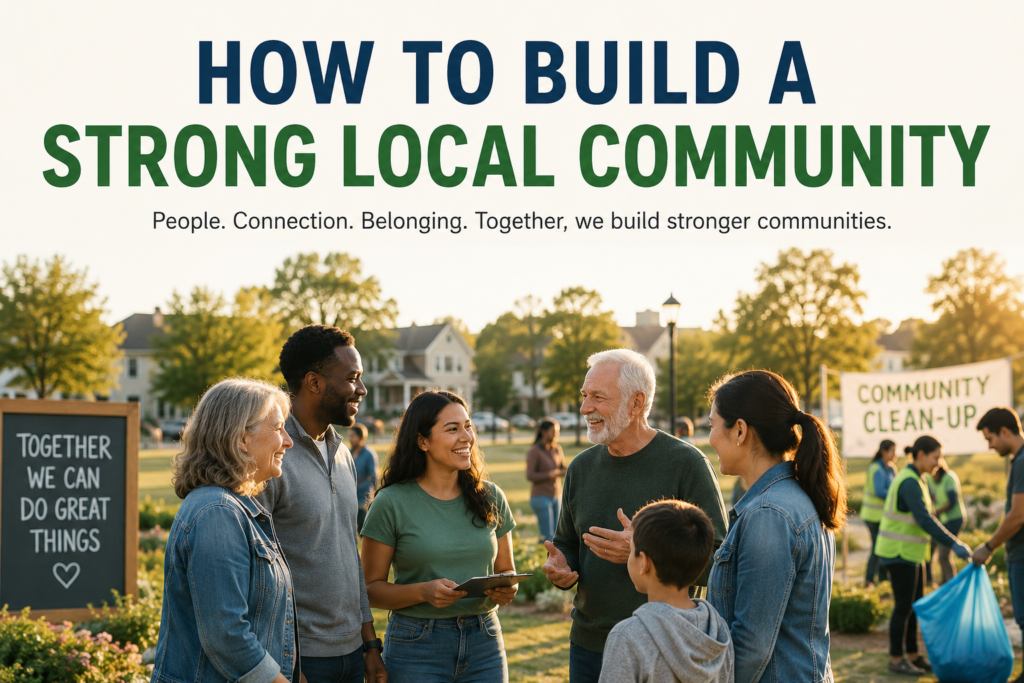
These activities do not need to be expensive. A weekend picnic, community clean up, sports day, book club, walking group, gardening activity, or simple neighborhood gathering can bring people together.
The important thing is consistency. If an activity happens only once and never returns, it may not create a lasting connection. A monthly or weekly activity can give people something to look forward to and help relationships grow naturally.
It is also a good idea to choose activities that are suitable for different age groups. Children, teenagers, adults, and older people should all have opportunities to participate.
Support Local Businesses
Local businesses are an important part of a strong community. Small shops, restaurants, markets, service providers, and other local businesses often depend on nearby customers.
Whenever possible, I believe people should consider supporting businesses in their own area. Buying from a local shop or using a local service can help keep money within the community and support local families.
People can also promote good local businesses through word of mouth. If I have a positive experience with a local business, telling friends or neighbors about it can help that business grow.
Local businesses can also become community partners by sponsoring events, supporting local activities, or providing spaces for gatherings. This creates a relationship where both residents and businesses benefit.
Start a Community Group
Communication is essential for any strong community. A local group can make it easier for residents to share information, discuss ideas, and organize activities.
Depending on the community, this could be an online group, a neighborhood meeting, or a combination of both. People can use such a group to announce events, share local news, discuss community projects, or ask for recommendations.
However, I think community groups should have simple and respectful rules. Arguments, personal attacks, and unnecessary negativity can quickly damage a community. The goal should be to create a place where people feel comfortable sharing useful information.
A good community group should focus on cooperation rather than conflict.
Encourage People to Volunteer
Volunteering is another powerful way to build stronger local relationships. People often feel more connected when they work together toward a common goal.
There are many ways to volunteer locally. People can help clean public areas, plant trees, organize charity activities, assist at community events, or support local educational programs.
Not everyone has the same amount of free time, so volunteer opportunities should be flexible. Even one hour of help can make a difference.
I also believe volunteering should not be viewed only as giving something away. Volunteers often gain new friendships, skills, confidence, and a stronger connection with their neighborhood.
Keep Public Spaces Clean
Clean and welcoming public spaces can have a major impact on community life. Parks, streets, playgrounds, sidewalks, and shared areas belong to everyone, so taking care of them should be a shared responsibility.
A community clean up is a simple way to encourage people to work together. Residents can choose a local area that needs attention and spend a few hours cleaning it.
Small improvements can make public spaces more pleasant and encourage people to spend more time outside. When people regularly see others taking care of their surroundings, they may also become more motivated to do the same.
Listen to Different People
A strong community should not be built around only one type of person. Every neighborhood has people with different ages, experiences, opinions, cultures, interests, and lifestyles.
In my view, listening is one of the most important parts of community building. People should have opportunities to express their concerns and ideas without feeling ignored.
This does not mean everyone will always agree. Disagreements are normal. What matters is how people handle them.
Instead of immediately rejecting an opinion, I think it is better to listen, ask questions, and try to understand the other person’s point of view. Respectful communication can prevent small disagreements from becoming larger problems.
Help People Who Need Support
A strong community looks after people who may need extra support. This can include older residents, new families, people living alone, or anyone going through a difficult period.
Sometimes support can be very simple. Helping someone carry groceries, sharing useful information, checking on an elderly neighbor, or offering assistance with a small task can mean a lot.
The important thing is to help respectfully. People should never feel embarrassed or judged for needing assistance.
When people know that their neighbors care about them, they feel safer and more connected to the place where they live.
Welcome New Residents
Moving to a new neighborhood can be difficult. New residents may not know anyone, understand local routines, or know where to find useful services.
I believe existing residents can make this transition easier by welcoming new neighbors. A friendly introduction and a little information about the area can make someone feel comfortable much faster.
For example, neighbors can tell newcomers about nearby shops, schools, parks, community activities, transportation options, and local events.
A welcoming attitude can also help prevent people from feeling isolated.
Encourage Young People to Participate
Young people should have an important role in community life. Children and teenagers can bring new ideas, energy, and creativity to local projects.
Communities can organize sports activities, educational events, creative workshops, reading programs, and volunteer opportunities for younger residents.
I think it is especially useful to allow young people to contribute ideas rather than simply telling them what to do. When they feel that their opinions matter, they are more likely to become active members of the community.
These experiences can also teach responsibility, teamwork, communication, and leadership.
Use Technology Wisely
Technology can make community communication much easier. Local websites, messaging groups, social media pages, and community apps can help people stay informed.
However, online communication should support real world relationships rather than replace them completely. A community can have a useful online group, but people still need face to face interaction.
Technology is most useful when it helps residents discover events, communicate important information, organize volunteers, and stay connected.
I would also recommend avoiding unnecessary arguments online. Written messages can easily be misunderstood, so respectful communication is especially important.
Celebrate Local Achievements
Communities should celebrate their successes, no matter how small they may seem. Recognizing people who contribute positively can encourage others to participate.
For example, a community could recognize volunteers, students, local businesses, teachers, organizers, or residents who have helped improve the neighborhood.
Celebrations do not have to be expensive. A simple gathering, community announcement, or thank you message can make people feel appreciated.
When people see that their efforts are noticed, they are more likely to continue helping.
Be Patient and Consistent
Building a strong local community takes time. I do not think it is realistic to expect everyone to become connected immediately.
Some people are naturally social, while others are more comfortable staying private. Respecting different personalities is important.
The key is to keep creating opportunities for connection. A single event may not change much, but regular communication and consistent community activities can gradually build trust.
Trust is one of the foundations of a strong community, and trust develops through repeated positive experiences.
Final Thoughts
In my opinion, a strong local community begins with simple human actions. Saying hello to a neighbor, helping someone who needs support, supporting a local business, joining a community activity, and listening to other people can all contribute to something bigger.
We do not need to wait for someone else to build the community we want. Every resident can play a small role.
A strong community is not about having perfect streets, expensive facilities, or large events. It is about people caring about the place they call home and caring about the people who live there.
If more people make small efforts to connect, cooperate, volunteer, and support one another, the entire neighborhood can become a better place to live.
For me, that is the real meaning of a strong local community. It is not simply a group of people living in the same area. It is a group of people who know that they are not alone and that they can make a positive difference together.