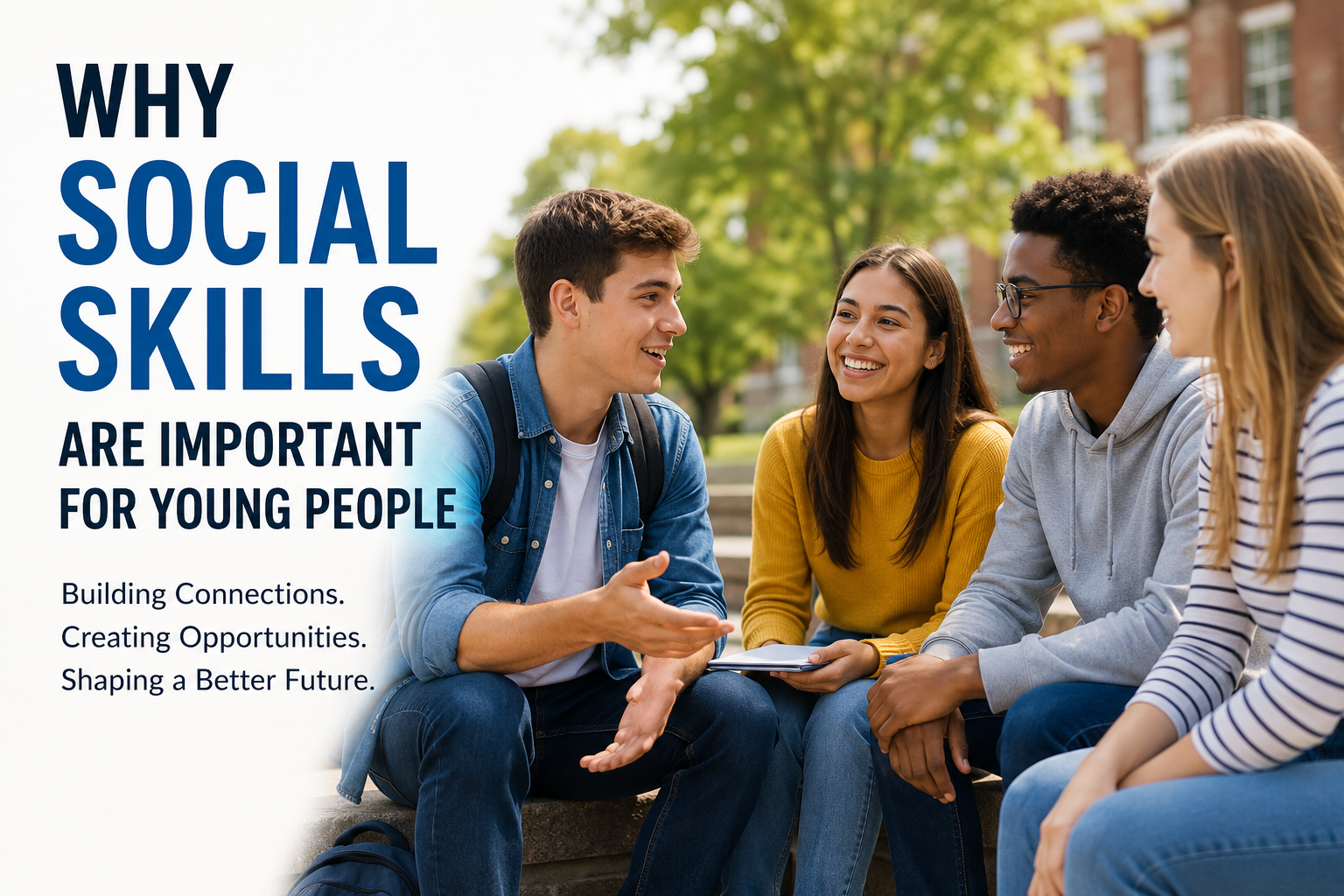
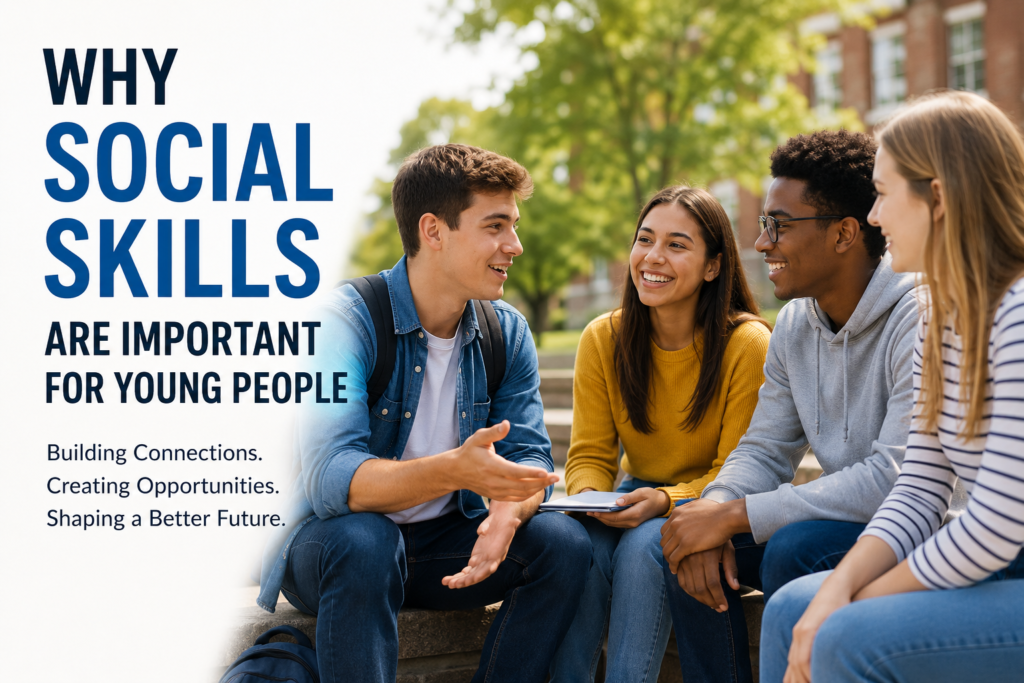
In my opinion, social skills are one of the most important things young people can develop in their lives. We often focus on education, grades, technical knowledge, and career skills, but knowing how to communicate and connect with other people is equally important. A person may have excellent academic knowledge, but if they cannot communicate their ideas, listen to others, work in a team, or handle disagreements, they may struggle in many areas of life.
Social skills are the abilities that help us interact with other people in a positive and respectful way. They include communication, listening, cooperation, empathy, confidence, problem solving, and understanding social situations. Young people use these skills every day at school, at home, online, at work, and in their communities.
I believe that developing good social skills at a young age can make life easier and more meaningful. These skills help young people build stronger relationships, find better opportunities, deal with challenges, and become responsible members of society.
What Are Social Skills?
Social skills are the abilities we use when communicating and interacting with other people. They are not limited to speaking. Good social skills also include knowing when to listen, understanding another person’s feelings, showing respect, and responding appropriately.
For example, when a young person talks to a teacher, works with classmates on a project, meets someone new, or participates in a community activity, social skills are involved. Even a simple conversation requires listening, speaking clearly, understanding body language, and responding politely.
In my view, social skills are learned through practice. Nobody is born knowing exactly how to communicate with everyone. Young people can improve these abilities by talking to different people, joining activities, working in groups, and learning from their experiences.
Social Skills Improve Communication
Communication is one of the biggest reasons social skills matter. Young people need to express their thoughts, feelings, questions, and opinions clearly. Good communication can prevent misunderstandings and help people understand one another.
I think being able to communicate clearly is useful in almost every situation. A student needs communication skills when asking a teacher for help. A young employee needs them when speaking with a manager. Friends need communication to solve problems and maintain their relationships.
Good communication is not only about speaking confidently. Listening is just as important. When young people learn to listen carefully instead of interrupting, they show others that their opinions and feelings matter.
Social Skills Help Build Strong Relationships
Human beings need relationships. Friends, family members, classmates, teachers, coworkers, and neighbors can all become important parts of our lives. Social skills help young people create and maintain these relationships.
A young person who knows how to communicate respectfully and show interest in others is more likely to develop healthy connections. Simple actions such as asking someone how they are doing, helping a friend, saying thank you, and respecting different opinions can make relationships stronger.
From my point of view, strong relationships can also provide emotional support during difficult times. When young people have positive people around them, they may feel more comfortable sharing their problems and asking for help.
Social Skills Increase Confidence
Confidence is another important benefit of developing social skills. Many young people feel nervous when speaking in front of others or meeting new people. This is completely normal, but regular practice can make these situations easier.
When a young person successfully starts a conversation, gives a presentation, joins a group discussion, or makes a new friend, they gain confidence from the experience.
I believe confidence grows through action. Waiting until we feel completely confident before communicating with others may prevent us from gaining valuable experience. Taking small steps can gradually make social situations feel more comfortable.
Social Skills Are Important for Education
Education is not only about studying books and passing exams. Students also need to work with teachers and classmates. Group projects, classroom discussions, presentations, and school activities all require social skills.
A student who knows how to cooperate with others can contribute more effectively to group work. They can share ideas, listen to different opinions, divide responsibilities, and help solve disagreements.
In my opinion, these abilities can make learning more enjoyable. When students feel comfortable communicating with their classmates, they may become more willing to ask questions and participate in discussions.
Social Skills Prepare Young People for Work
The workplace requires much more than technical knowledge. Employers often look for people who can communicate, cooperate, solve problems, and work well with others.
Young people who develop social skills early may find it easier to adjust to professional environments. They need to communicate with coworkers, customers, supervisors, and sometimes people from completely different backgrounds.
For example, a young employee may have an excellent idea but still need to explain it clearly to a team. Another employee may need to handle a disagreement without becoming aggressive. These situations require communication, patience, confidence, and emotional awareness.
I think learning these skills before entering the workplace can give young people a valuable advantage.
Social Skills Teach Empathy
Empathy means trying to understand another person’s feelings and perspective. It is an important social skill because everyone experiences life differently.
Young people meet people with different personalities, backgrounds, beliefs, interests, and experiences. Learning to respect these differences can help them become more understanding.
In my opinion, empathy can reduce unnecessary conflict. Instead of immediately judging someone, a person with empathy may stop and think about why that person feels or behaves in a certain way.
This does not mean agreeing with everyone. It simply means treating people with understanding and respect.
Social Skills Help With Conflict
Disagreements are a normal part of life. Friends may misunderstand each other. Classmates may disagree about a project. Coworkers may have different opinions. Families can also experience arguments.
The important thing is learning how to handle these situations in a healthy way.
Young people with good social skills can learn to discuss problems calmly, listen to the other person’s point of view, explain their own feelings, and look for reasonable solutions.
I believe avoiding every disagreement is impossible. What matters is learning how to manage disagreements without unnecessary anger or disrespect.
Social Skills Encourage Teamwork
Teamwork is needed in schools, workplaces, sports, community projects, and many other areas. Young people who know how to cooperate can become valuable members of a team.
Teamwork requires sharing responsibilities and respecting the contributions of others. Sometimes a person has to lead, while at other times they need to support someone else.
I think young people should experience different team situations because teamwork teaches lessons that cannot always be learned from books. It teaches patience, responsibility, communication, and compromise.
Social Skills Help Young People Become Responsible Citizens
Young people are not only preparing for their own futures. They are also part of their communities. Good social skills can help them participate positively in society.
A young person who knows how to communicate and cooperate may feel more comfortable joining community activities, helping others, volunteering, or discussing local issues.
When people can communicate respectfully even when they have different opinions, communities can become stronger. In my view, young people with good social skills are more likely to contribute positively instead of simply watching problems from a distance.
Social Skills Are Important in the Digital World
Today, social interaction does not happen only face to face. Young people communicate through social media, messaging apps, online communities, games, and other digital platforms.
This makes social skills even more important. People need to understand that messages can easily be misunderstood when facial expressions and tone of voice are missing.
Young people should learn to communicate respectfully online, think before posting, and understand that there is a real person behind every account.
I believe digital communication should be treated with the same basic respect as face to face communication.
How Young People Can Improve Social Skills
The good thing about social skills is that they can be improved with practice. Young people do not need to become extremely outgoing to have good social skills. Even quiet people can be excellent communicators.
One useful step is to practice active listening. Instead of thinking about what to say next, pay attention to what the other person is saying.
Another step is to participate in group activities. Sports, school clubs, volunteer projects, and community activities provide opportunities to communicate with different people.
Young people can also practice introducing themselves, asking questions, giving opinions respectfully, and accepting constructive feedback.
I believe it is also important to learn from mistakes. Everyone says the wrong thing sometimes or handles a situation poorly. Instead of feeling embarrassed forever, we can think about what happened and try to respond better next time.
Final Thoughts
In my opinion, social skills are essential for young people because they affect almost every part of life. They help us communicate, build relationships, gain confidence, work with others, understand different perspectives, handle disagreements, and prepare for future careers.
Academic knowledge can open a door, but social skills can help a person build meaningful relationships after walking through that door. These abilities are useful at school, at work, at home, online, and within the community.
I believe every young person should have opportunities to practice social skills without being afraid of making mistakes. Nobody becomes a perfect communicator overnight. It takes patience, experience, and regular interaction with others.
The most important thing is to start with small steps. Listen carefully, speak respectfully, show empathy, cooperate with others, and stay open to learning. Over time, these simple habits can make a major difference.
Young people are the future of every community, and their ability to communicate and cooperate can shape the kind of society we live in. For me, that is why social skills are not just useful abilities. They are an important part of becoming a confident, responsible, and positive person.