I believe young people have an important role in making a community better. Many people think that helping the community requires a lot of money, special skills, or a big organization. In my opinion, this is not true. Small actions can create meaningful changes when people work together. Young people can contribute their time, energy, creativity, and ideas in many simple ways.
Community activities do not always have to be complicated. Sometimes helping an elderly neighbor, cleaning a public place, planting a tree, donating useful items, or helping younger children with their studies can make a real difference. These activities also help young people develop confidence, communication skills, responsibility, and a stronger connection with the people around them.
Why Community Activities Matter
I think community activities are important because they bring people closer together. In everyday life, many people are busy with school, work, social media, and personal responsibilities. Because of this, they may not get enough opportunities to interact with people in their neighborhood.
When young people participate in community activities, they meet different people and understand different experiences. They learn that everyone has their own problems, talents, and needs. This understanding can make young people more caring and responsible.
Community activities can also help young people discover their abilities. Someone who is shy may become more confident after working with a group. Someone who enjoys organizing things may discover leadership skills. Another person may find that they enjoy teaching, gardening, writing, or helping others.
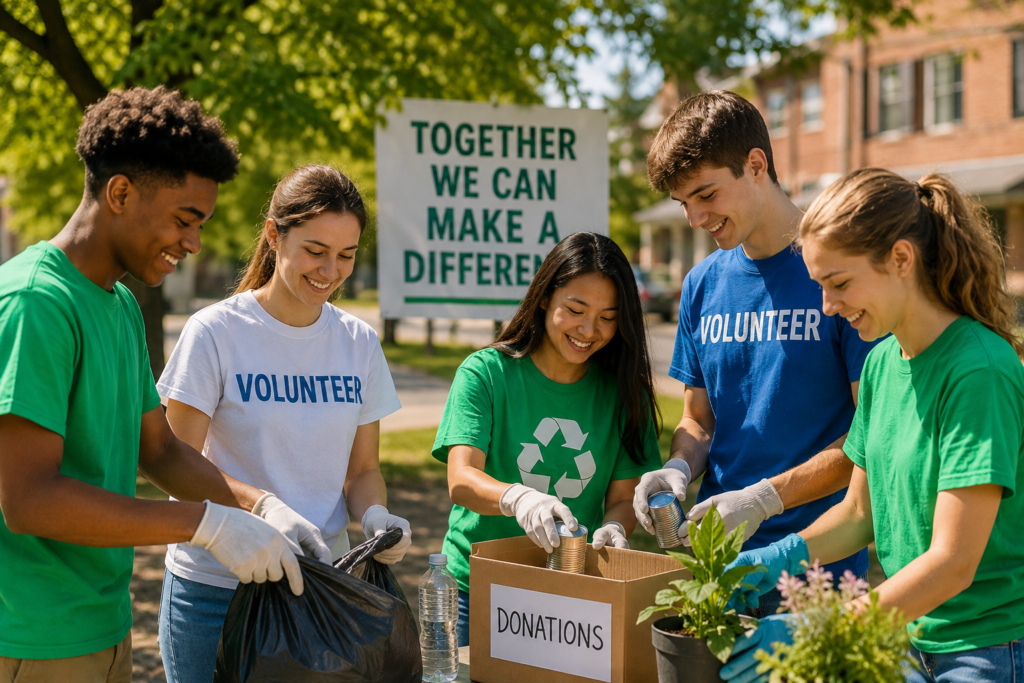
1. Cleaning Local Public Places
One of the simplest community activities is cleaning public areas. Young people can organize a small cleaning activity in a park, playground, street, school area, or other suitable public space.
A group of friends can spend one or two hours collecting litter and placing it in the proper waste containers. This may look like a small action, but it can make the area cleaner and more pleasant for everyone.
I believe this activity also teaches an important lesson. A clean community is not only the responsibility of the government or cleaning workers. Every person has a role in keeping shared spaces clean.
2. Planting Trees and Caring for Plants
Planting trees is another simple activity that young people can do together. Trees provide shade, improve the appearance of an area, and support a healthier environment.
Young people can plant trees around schools, community spaces, or other places where planting is permitted. They can also create small gardens and take responsibility for watering and caring for plants.
In my view, the best part of this activity is that it teaches patience. A tree does not become large overnight. Young people have to care for it regularly and watch it grow over time.
3. Helping Older People
Many older people in our communities need simple forms of assistance. Young people can help them with shopping, carrying groceries, organizing household items, using basic technology, or completing other safe everyday tasks.
Sometimes, however, older people do not need physical help. They may simply appreciate someone spending time with them and listening to their stories.
I think young people can learn a lot from older members of the community. They have experiences and lessons that cannot always be found in books or on the internet.
4. Helping Children With Their Studies
Young people who are good at a particular subject can help younger children with their studies. This can be done through a small study group at a community center, school, library, or another appropriate place.
For example, a student who is good at mathematics can help younger students understand basic problems. Someone who enjoys reading can help children improve their reading habits.
This activity benefits both sides. Younger children receive support, while the older students improve their communication and teaching skills.
5. Organizing a Book Donation
Books can be valuable resources, especially for children who have limited access to them. Young people can collect books from friends, relatives, schools, or other willing donors and give them to local schools, libraries, or community organizations.
The important thing is to donate books that are useful and in reasonable condition.
I like this activity because one book can be used by many people over time. Instead of leaving books unused at home, young people can give them a second life by sharing them with others.
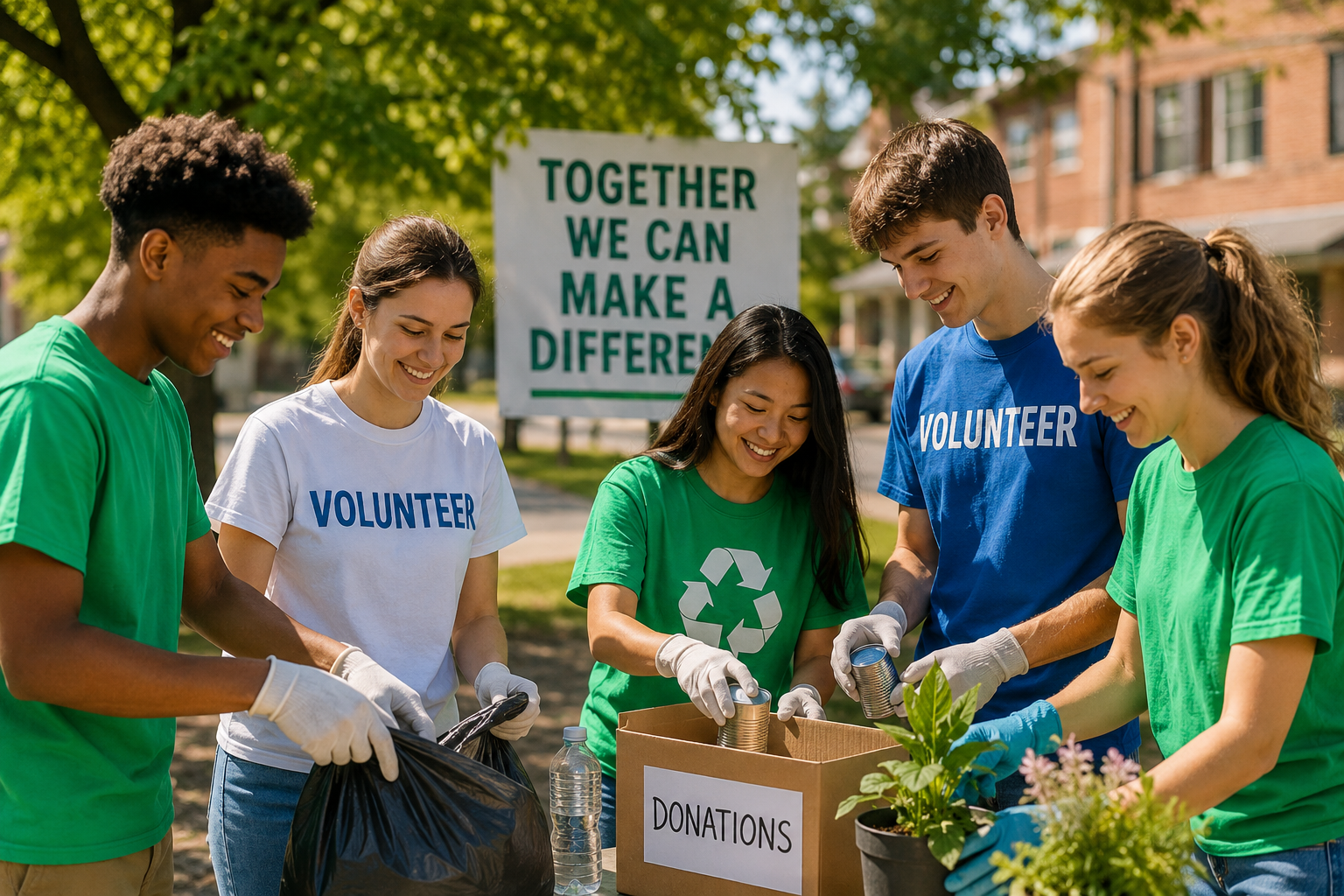
6. Collecting Useful Donations
Young people can also organize small donation drives for people who need support. Items can include clean clothes, school supplies, books, blankets, or other useful everyday things.
The focus should be on collecting items that are genuinely useful rather than simply giving away unwanted rubbish.
Young people can work together to sort, organize, and distribute donations through trustworthy community organizations. This teaches them how to plan an activity and work responsibly with others.
7. Visiting Community Centers
Community centers can provide opportunities for young people to meet others and participate in useful activities. Young people can volunteer their time by helping organize events, arranging books, assisting with educational activities, or supporting simple programs.
I believe these places can also help young people understand what their community actually needs. Instead of guessing about problems, they can listen to people and learn directly from them.
8. Organizing a Sports Activity
Sports are a great way to bring young people together. A group can organize a friendly football, cricket, basketball, badminton, or other sports activity.
The purpose does not have to be competition. The main goal can simply be exercise, friendship, teamwork, and having a positive time together.
Sports can teach young people how to cooperate, respect others, handle success, and accept disappointment. These lessons are useful far beyond the playing field.
9. Sharing Useful Skills
Every young person knows something that could be useful to someone else. One person may know basic computer skills, another may understand photography, while someone else may be good at drawing, writing, cooking, or repairing simple things.
Young people can organize informal skill sharing sessions where they teach one another.
In my opinion, this is one of the most affordable community activities because it does not require expensive equipment. The most important resource is simply knowledge.
10. Supporting Local Events
Young people can volunteer during local events such as educational programs, sports days, cultural activities, charity events, or community gatherings.
They can help with registration, organizing materials, guiding visitors, setting up safe activity areas, or cleaning afterward.
These responsibilities may seem small, but they can make events run more smoothly. Young people also gain experience in teamwork and organization.
11. Spreading Positive Information
Young people spend a lot of time online, so they can use social media in a positive way. They can share information about local volunteer opportunities, educational resources, environmental activities, or community events.
However, I believe it is important to check information before sharing it. Responsible communication is just as important as participation.
Instead of using social media only for entertainment, young people can also use it to encourage positive action.
12. Starting a Small Community Project
A community project does not need to be large. A few friends can choose one problem and try to improve it.
For example, they might decide to clean a local area every month, collect books for children, plant trees, or organize free study sessions.
The key is consistency. A small activity repeated regularly can have a greater impact than one large activity that never happens again.
Benefits for Young People
Community activities do more than help other people. They also help young people grow personally.
One major benefit is confidence. When young people complete a useful task, they feel that their efforts matter. This can encourage them to take on bigger responsibilities.
Another benefit is communication. Working with different people teaches young people how to listen, explain ideas, solve disagreements, and cooperate.
Community activities can also develop leadership skills. Young people learn how to plan activities, divide responsibilities, manage time, and motivate others.
Perhaps most importantly, these activities can create a sense of belonging. When young people feel connected to their community, they are more likely to care about what happens around them.
How to Start
Starting a community activity is easier than many people think. I would begin with something small. Instead of trying to organize a huge event, I would gather a few friends and choose one simple goal.
First, identify a genuine need in the local area. Then decide what can realistically be done with the available time and resources. After that, divide responsibilities among the group.
It is also important to follow local rules and ask for permission when necessary. Young people should choose safe activities and involve parents, teachers, community leaders, or trusted organizations when appropriate.
Most importantly, I would not wait for everything to be perfect. A small positive action is better than a great idea that is never put into practice.
Conclusion
In my opinion, young people do not have to wait until they are older to make a difference. They can contribute to their communities right now through simple and meaningful activities.
Cleaning public places, planting trees, helping older people, supporting children with their studies, donating books, organizing sports, sharing skills, and volunteering at local events are all practical ways to get involved.
The real value of community activities is not only the immediate result. These experiences help young people become more responsible, confident, caring, and active members of society.
I believe every young person has something valuable to offer. Sometimes it may be time, sometimes knowledge, sometimes energy, and sometimes simply the willingness to help. When small efforts come together, they can create a much bigger positive change. A better community does not always begin with a huge project. Sometimes it begins with one young person deciding to help.